Use the movement test first
The quickest way to check a costume is to watch the child move in it. Ask them to walk across the room, sit on the floor, stand up, climb one step, turn their head, reach for a treat bag, and pretend to run in place. If the costume fails during those ordinary movements, it will struggle at a school parade, birthday party, stage day, or Halloween walk.
Costume safety is not only about rare hazards. It is also about small annoyances that become big problems after thirty minutes: shoes that slip, a cape that catches underfoot, a mask that slides over the eyes, a waistband that pinches, or a prop that keeps hitting other people. Children may not explain the problem clearly. They may just pull, fuss, freeze, or abandon the costume.
Do the movement test before the event, not at the doorway. It is easier to shorten a cape, change shoes, or remove a prop at home.
Masks, hoods, and head pieces
Masks can make a costume feel complete, but they deserve extra caution. A mask should not block breathing, narrow side vision, press into the eyes, or make it hard to hear. It should stay in place without tight elastic and should come off easily if the child feels uncomfortable.
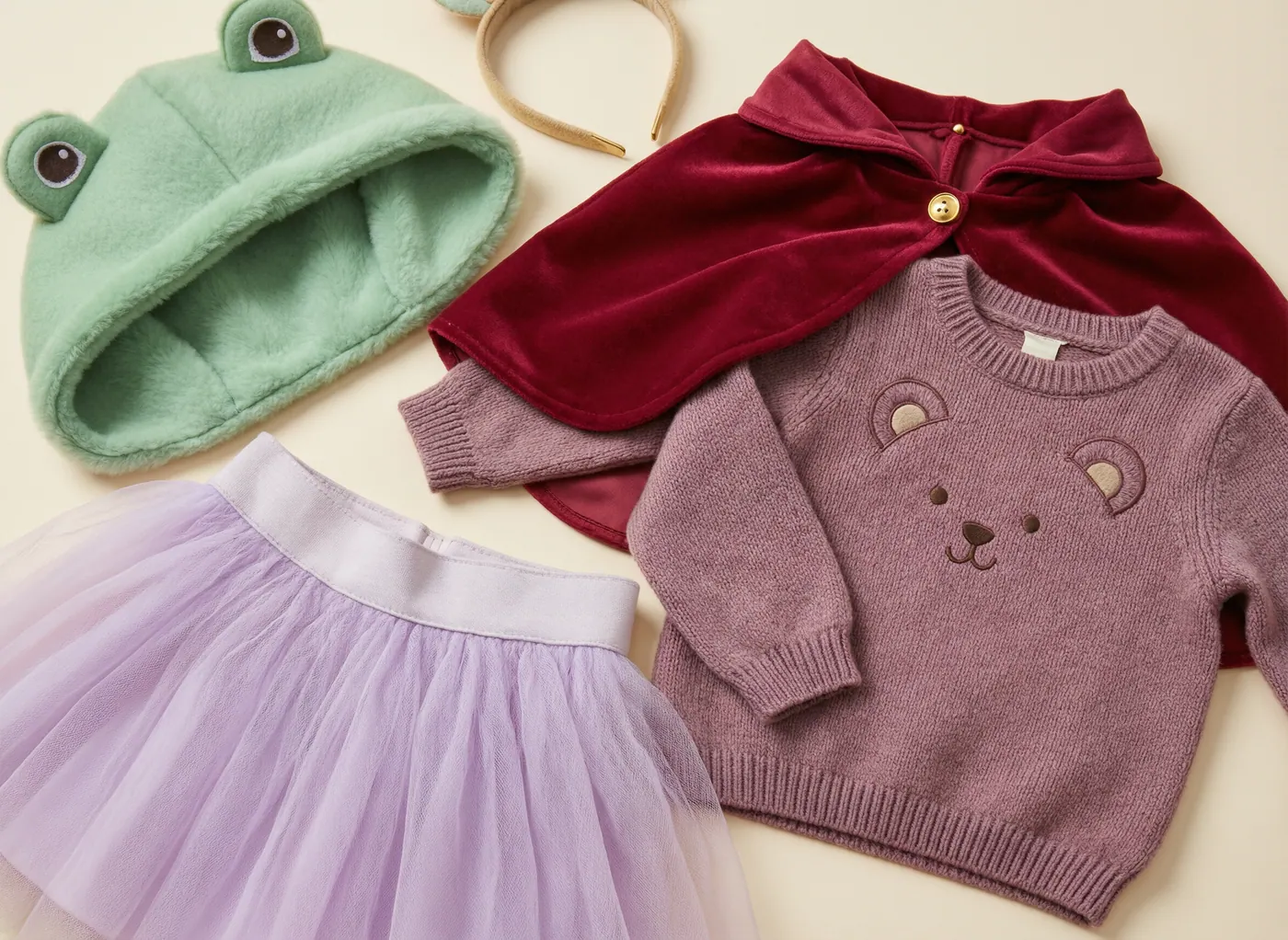
For toddlers and many preschoolers, skip masks altogether. Soft ears, a hat, a hood, a fabric crown, face paint, or a color cue can do the same job. A toddler in a brown shirt with soft ears is much safer and happier than a toddler fighting a rigid animal mask.
Hoods and hats should not slide over the eyes. If a hood is attached to a cape or robe, check how it behaves when the child runs or turns. Tight elastic can cause headaches. Hard headbands can pinch behind the ears. Heavy crowns may fall forward. The best head piece is light, soft, and easy to ignore once play begins.
Cords, capes, and closures
Long ties and drawstrings around the neck do not belong in active children's costumes. CPSC drawstring guidance says hood and neck drawstrings on children's upper outerwear in sizes 2T through 12 present a strangulation hazard. Costume pieces are not always outerwear, but the practical lesson is clear: avoid tight neck ties and use breakaway closures when a cape or cloak sits near the throat.
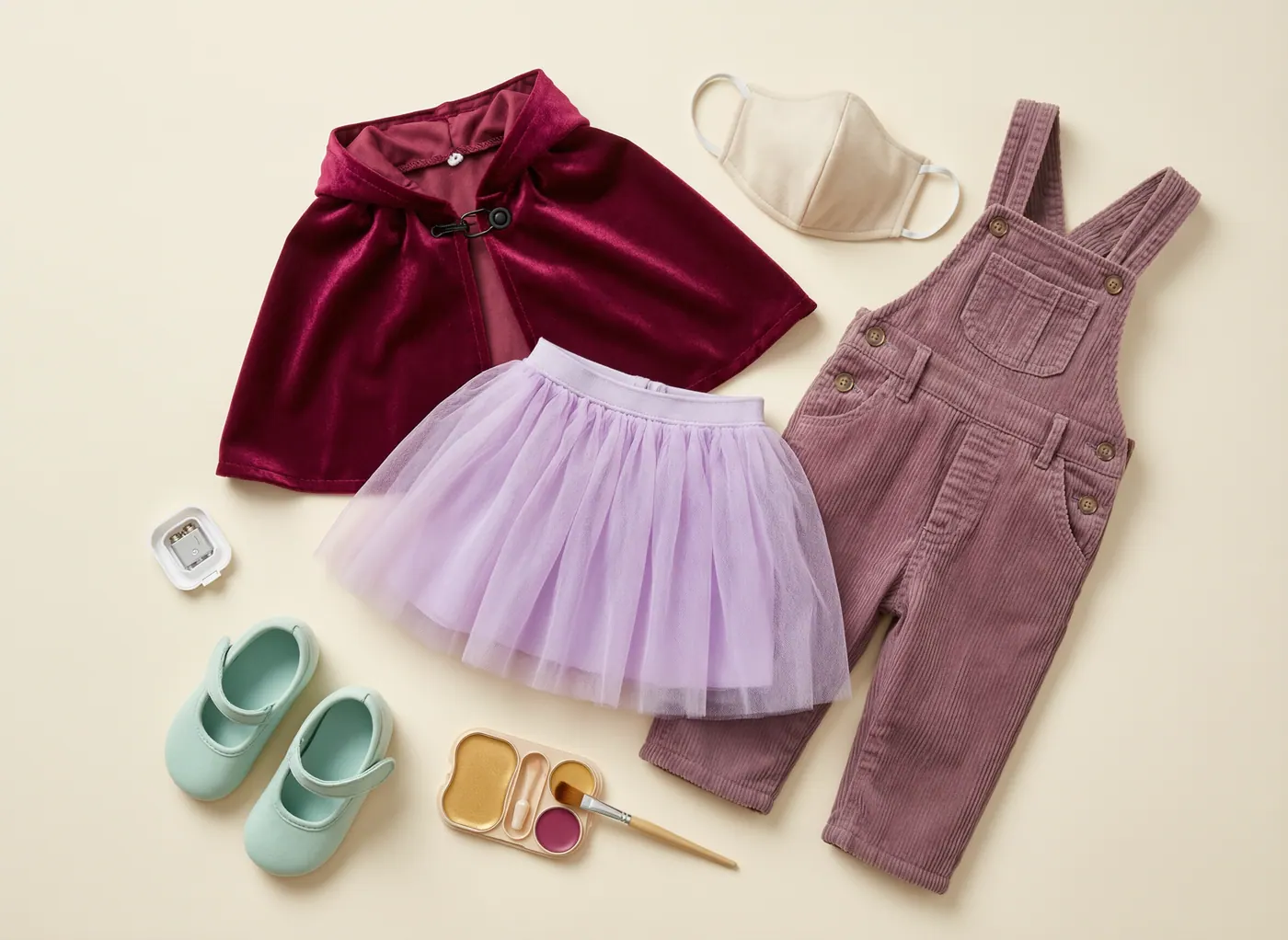
Look for hook-and-loop tabs, snaps, or closures designed to release under pressure. If a cape has long ribbon ties, consider replacing them or tying the cape loosely across the shoulders instead of around the neck. Keep capes short enough that they do not drag under the feet or catch in wheels, doors, playground equipment, or chairs.
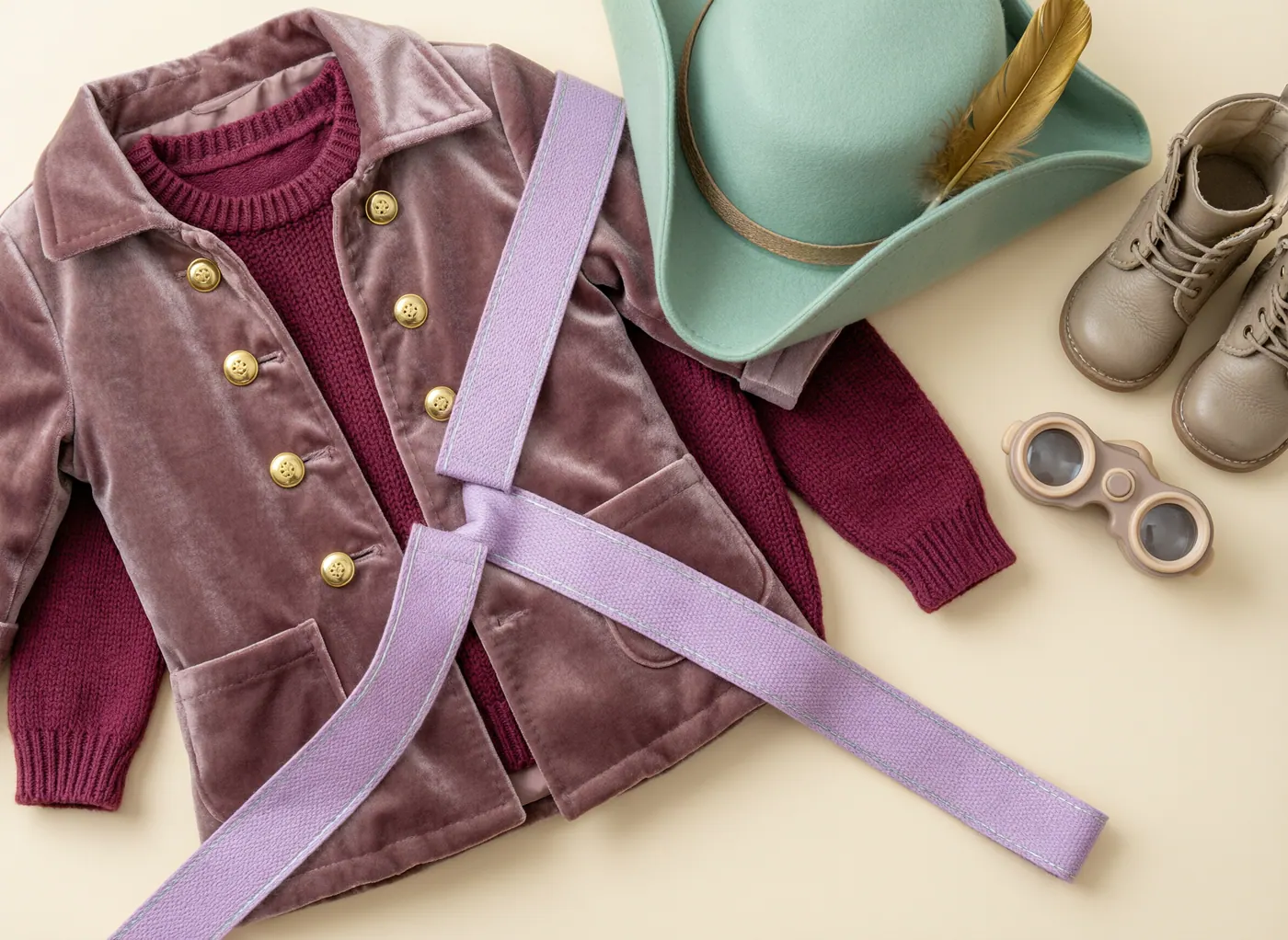
Long sashes, belts, and scarves need supervision. They can be useful for older children who understand boundaries, but they are not ideal in a toddler bin. If a piece trails behind the child, shorten it or save it for calm pretend play.
Small parts, magnets, and batteries
Costume accessories often contain the parts that cause the most concern: gems, beads, clips, small buttons, loose charms, plastic jewels, snap-on decorations, and tiny badges. Before adding a piece to the dress-up area, pull gently on trims and attachments. If something feels loose, remove it or repair it before play.
For children under three, treat small parts seriously. The CPSC small parts guidance focuses on toys and children's products that can create choking hazards, and parents can use the same caution at home. If a loose piece is small enough to fit in a toddler's mouth, it should not be accessible.
Battery items need another check. Light-up shoes, crowns, wands, microphones, necklaces, and bracelets may use button cell or coin batteries. Reese's Law created federal safety requirements for those batteries and products that contain them. Choose items with screw-secured compartments, check that the door is intact, and discard damaged battery accessories. Never leave loose batteries in an accessory bin.
Magnets also deserve caution. Small strong magnets can be dangerous if swallowed. Avoid loose magnetic accessories for young children and inspect magnetic closures for damage.
Shoes and walking surfaces
Shoes are the quiet costume deal-breaker. A child may tolerate an itchy sleeve for a little while, but slippery shoes can cause a fall immediately. Costume heels, oversized boots, plastic slippers, and shoes with slick soles are not worth it for school events or outdoor walking.
Use familiar shoes whenever possible. If the costume needs a specific color, choose socks, leggings, shoe clips used with care, or decorative covers that do not change the way the shoe grips the ground. For Halloween, assume the child will walk farther than usual, step over curbs, climb porch steps, and move through crowds.
Check hems while the child is wearing the actual shoes. Pants, dresses, capes, and tails that seem fine barefoot may drag once shoes are on. Shorten or pin safely before the event.
Face paint, makeup, and glitter
Face paint can be a good mask alternative, but it should be treated like a skin product. Use products labeled for skin, not craft paint, markers, or glitter glue. Test a small patch ahead of time, especially for children with sensitive skin. Keep paint away from eyes and lips unless the product specifically says that use is appropriate.
Avoid loose glitter near the eyes. Glitter can migrate, irritate, and shed onto furniture, car seats, and classrooms. If sparkle matters, use fabric, sequins securely attached to clothing, or a washable skin-safe product made for faces.
Remove face paint before bed. A gentle cleanser and patience are better than scrubbing. If the child hates the removal process, use a smaller design next time.
Weather, visibility, and event setting
Costumes need to fit the real setting. A warm costume may be unbearable in a crowded indoor party. A thin dress may be too cold for an October night. Plan layers during the costume test. A base layer under the costume usually works better than a bulky coat thrown over it later.
For evening outdoor events, add visibility. Reflective tape can go on treat bags, capes, shoes, stroller handles, or wagon sides. Glow bracelets and clip-on lights help, but check batteries and avoid items young children can chew or open.
Think about the event too. A costume for a classroom should allow sitting, lunch, recess, bathroom use, and quiet movement. A costume for a bounce house or playground should lose the hard props, stiff wings, and slippery shoes. A costume for photos can be more decorative, but change into safer pieces before active play.
Store safely after the event
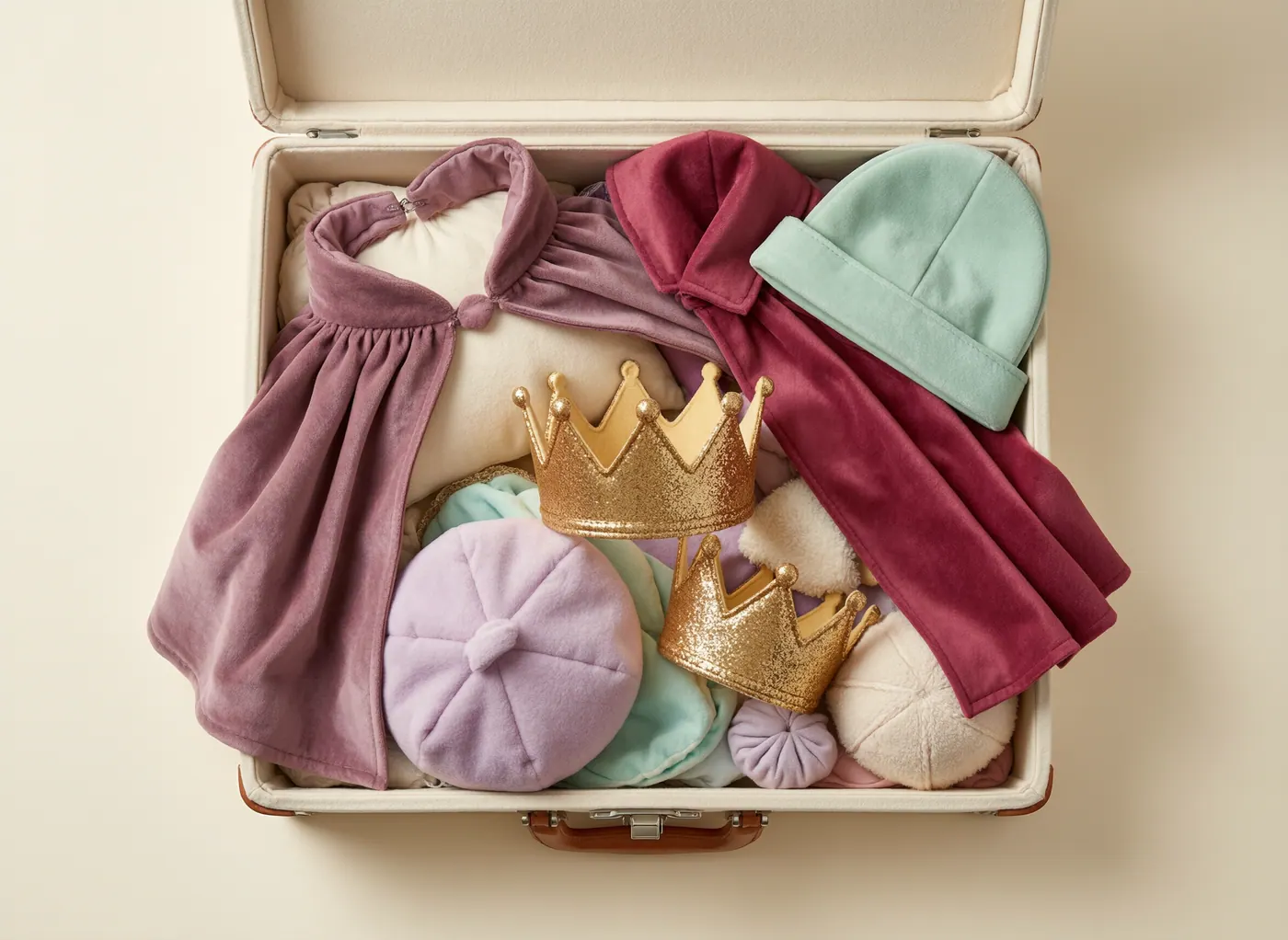
After Halloween, a party, or a school parade, do not toss everything straight into the dress-up bin. Sort first. Keep the pieces that are comfortable, washable, and open-ended. Remove broken props, loose trim, cracked plastic, shedding glitter, and anything with a damaged battery compartment.
Wash clothing before storage. Check seams, elastic, snaps, and closures. Put tiny accessories in a higher container if toddlers or younger siblings are present. Retire anything that only works as a one-time photo item.
A good safety check takes a few minutes and saves many small problems. The best costume is not the most elaborate one. It is the one a child can wear comfortably while seeing, breathing, moving, and playing like themselves.