Build The Costume From A Comfortable Base
A unicorn costume is easiest to wear when the base layer is ordinary clothing that already feels good on the child. Start with leggings, joggers, a long-sleeve shirt, a sweatshirt, a simple dress, or pajamas in white, cream, lavender, mint, blush, pale blue, or soft gray. These colors read as unicorn without requiring a full costume set, and they let children move the way they normally do.
The base should be washable and weather-appropriate. For classroom dress-up days, indoor birthdays, and pretend-play trunks, cotton layers usually work better than shiny polyester. For chilly events, a pastel hoodie can become the body of the costume. For warm weather, a short-sleeve shirt with a light tulle skirt or cape keeps the look airy. Children are more likely to keep wearing the costume if they are not overheated, itchy, or constantly adjusting pieces.
Once the base is comfortable, add only the pieces that make the character clear. A horn, a mane detail, and one magical layer are enough. This approach is especially helpful for preschoolers because it avoids complicated closures and reduces the number of items that can be lost during a party, school event, or playdate.
Pick One Strong Unicorn Signal
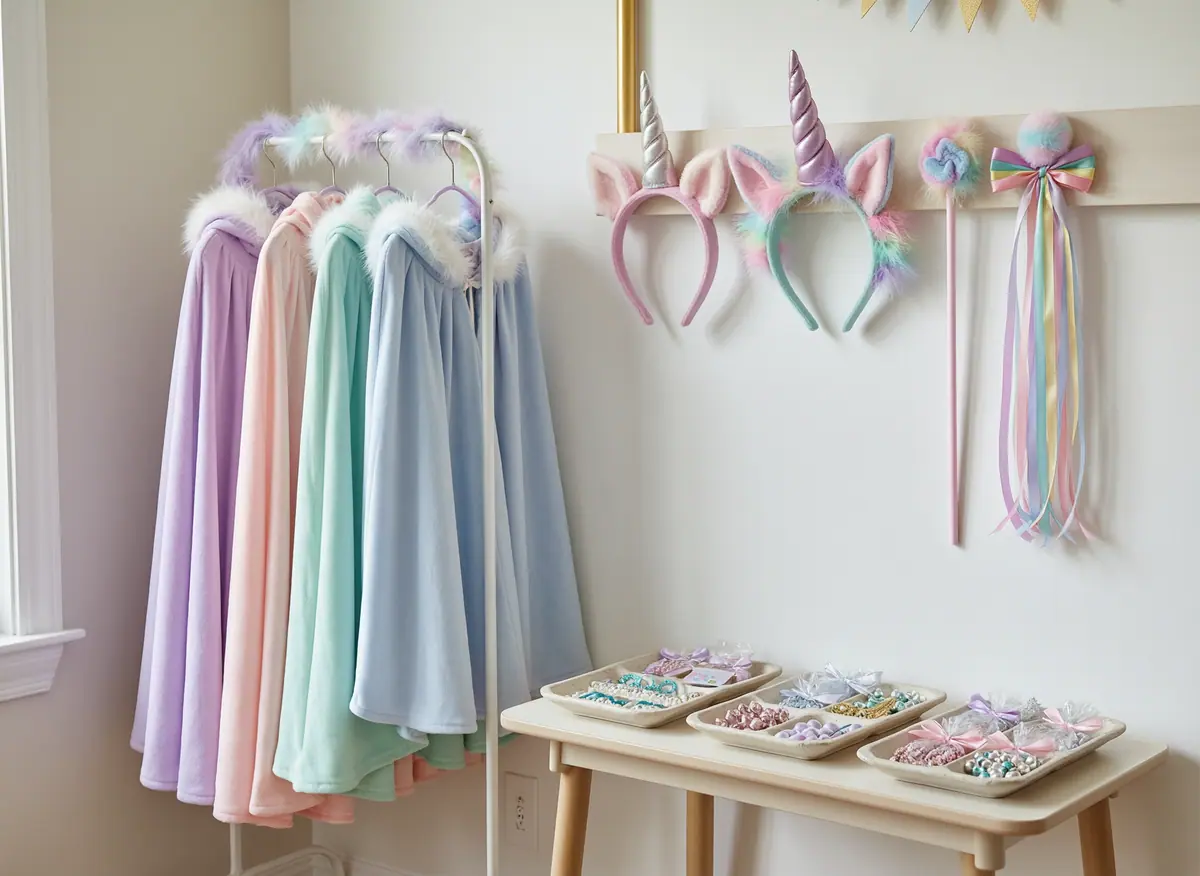
The horn is the most recognizable unicorn detail, but it does not have to be elaborate. A padded horn headband, a soft fabric crown with a small horn, or a hood with a sewn-on horn all work. The best choice depends on the child. Some children like headbands because they are easy to remove. Others prefer a hood because it feels like part of the shirt instead of a separate accessory.
Check the headpiece before relying on it. It should not press behind the ears, slide into the eyes, or include stiff pieces that poke when the child bends down. If the horn is tall and heavy, it may look charming on a shelf but become annoying after five minutes of active play. Shorter horns usually last longer because children forget they are wearing them.
If your child dislikes headwear, use a different signal. A rainbow mane sewn or clipped to a hoodie, a sparkly chest patch, or a unicorn medallion necklace can carry the theme. For younger children, a soft scarf in rainbow colors may be more successful than a headpiece. The goal is not to force the most obvious accessory; it is to make the costume enjoyable enough to wear.
Add A Mane, Tail, Or Cape Without Creating A Trip Hazard
Manes and tails give unicorn costumes movement, but they need careful sizing. A mane can be made from felt strips, ribbon, yarn, or fabric fringe attached to a hoodie, cape, or headband. Keep the pieces short enough that they do not wrap around the neck or get caught under arms. Fabric fringe is often easier to manage than long ribbon because it moves softly and does not tangle as quickly.
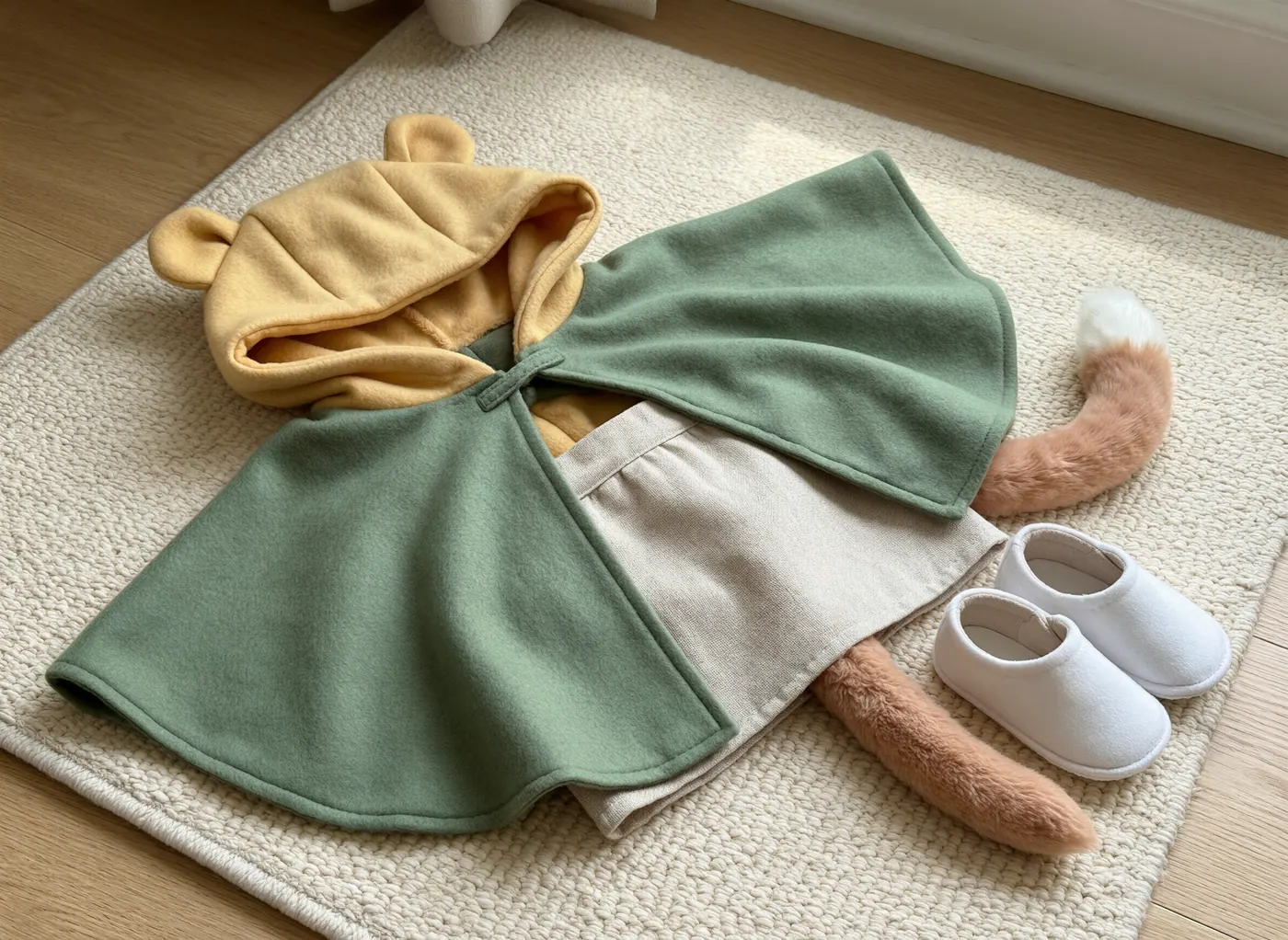
Tails should be shorter than many costume photos suggest. Attach the tail above the back of the knee, and keep it soft and lightweight. A cluster of tulle strips, fleece strips, or yarn works well if the ends are secure. Avoid heavy charms, bells, long cords, or anything that drags. Children sit, crawl, and spin in costumes, so tails need to behave during real play.
A cape can replace both mane and tail for a simpler outfit. Look for a cape that closes with hook-and-loop tape, snaps, or another easy-release closure. It should land around the hip or mid-thigh for preschoolers and above the knee for older children. Long capes may feel dramatic, but they are harder to climb stairs in and more likely to catch under chairs.
Use Outfit Formulas For Different Ages
For toddlers, keep the unicorn costume extremely simple: a pastel sweatshirt, soft leggings, a small horn hood or headband, and maybe a short cape. Skip tails unless they are attached securely and stay well above the floor. Toddlers often remove accessories, so make the base outfit cute enough to stand on its own.
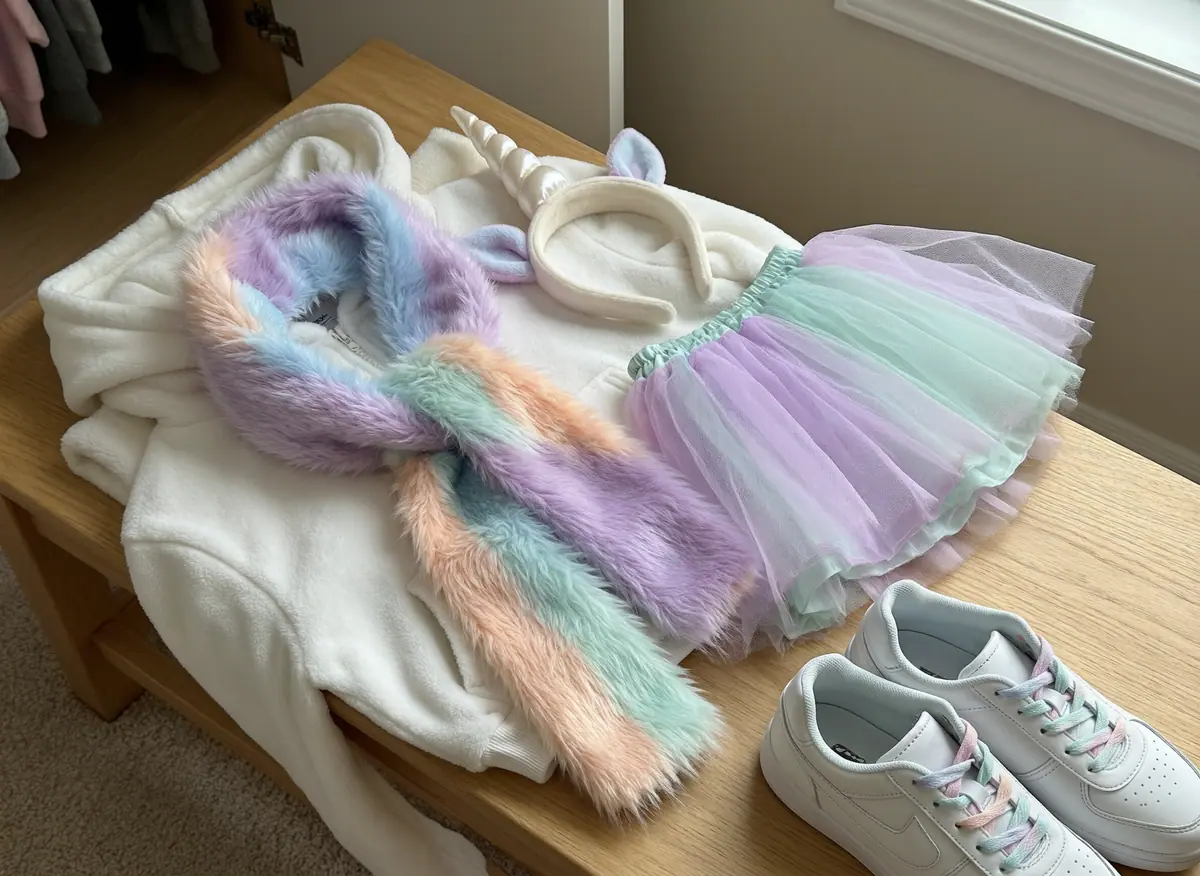
For preschoolers, try a white shirt, rainbow scarf, tulle skirt or joggers, and padded horn headband. Add soft slippers only if the event is indoors and the floor is safe. Preschool children may want to change roles throughout the day, so avoid pieces that require an adult to lace, tie, or button repeatedly.
For elementary children, the costume can include more personality. A moon unicorn might wear silver stars and a gray cape. A garden unicorn might wear flower clips and a green sash. A rainbow unicorn might wear a multicolor mane and bright sneakers. Older children often enjoy choosing a backstory, and that backstory can guide the outfit without requiring expensive pieces.
Make A Budget Unicorn Costume Feel Intentional
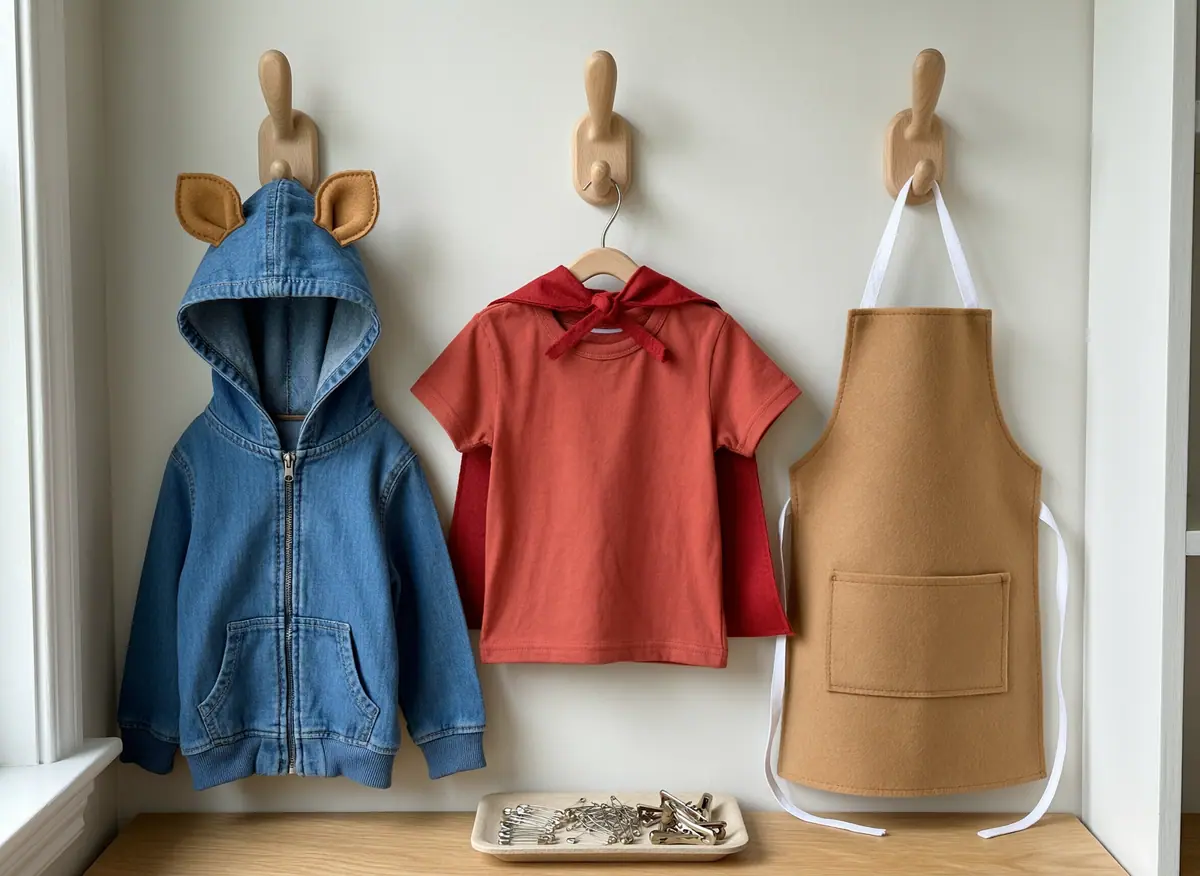
The least expensive unicorn costume starts with clothing already in the closet. Add one purchased or handmade horn, then use ribbon, felt, scarves, or a tutu from the dress-up bin. A plain hoodie becomes special when you add a removable felt mane with fabric tape or hand stitches. A simple dress becomes a unicorn outfit with a sash, star clips, and a horn headband.
If buying one new item, choose the piece that will be reused most. For many families, that is a soft cape or a comfortable headband. A full costume may only fit one event, while a cape can support unicorn, fairy, royal, rainbow, and wizard play. Look for washable fabrics and flexible sizing before decorative details. A costume that survives repeated play has better value than one that looks perfect once.
Storage also helps the costume feel complete. Keep the horn, mane, and cape together in a labeled pouch or shallow bin. If the base outfit is regular clothing, write a small note for yourself: white leggings, mint top, rainbow scarf. That way the costume can be rebuilt quickly for a birthday, school spirit week, or last-minute pretend-play afternoon.
Check Safety And Comfort Before The Event
Do a five-minute movement test before the costume leaves the house. Ask the child to sit, stand, spin, bend, walk up a step, and reach both arms overhead. Watch what slips, scratches, or catches. If a headband moves during the test, it will probably move more during the event. If a cape catches under the child when they sit, shorten it or swap it.
Look closely at decorations. Sequins, gems, and glued stars can loosen with movement. For younger children, remove anything that could become a small loose piece. For older children, explain which parts are decorative and should not be pulled. Smooth seams near the neck, waist, and wrists matter more than sparkle. A scratchy costume usually becomes an unworn costume.
Pack a small backup plan. A plain cardigan, extra hair tie, soft scarf, and small bag for removed accessories can rescue the day. The child may decide they are finished wearing the horn but still want to be part of the theme. When the costume is flexible, the magic lasts longer because comfort stays in charge.