Gather Materials That Are Forgiving
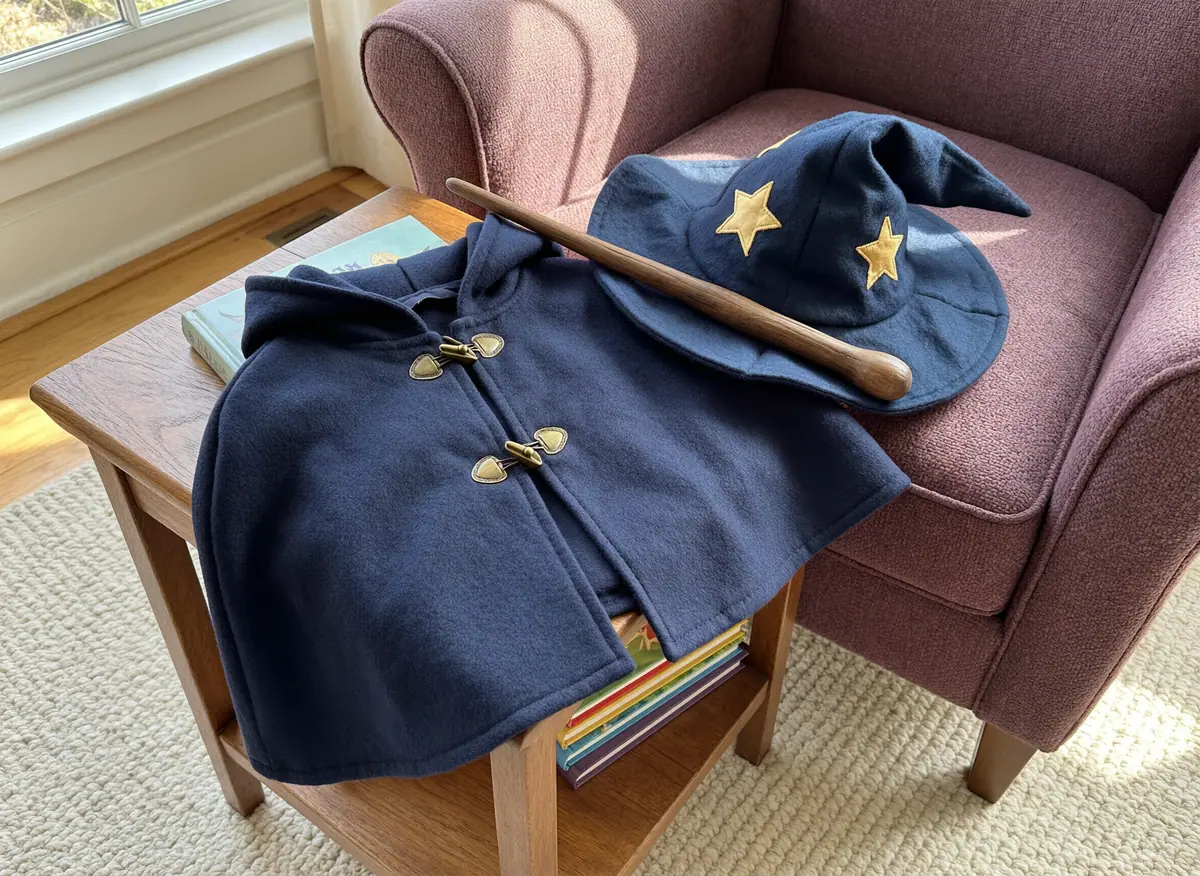
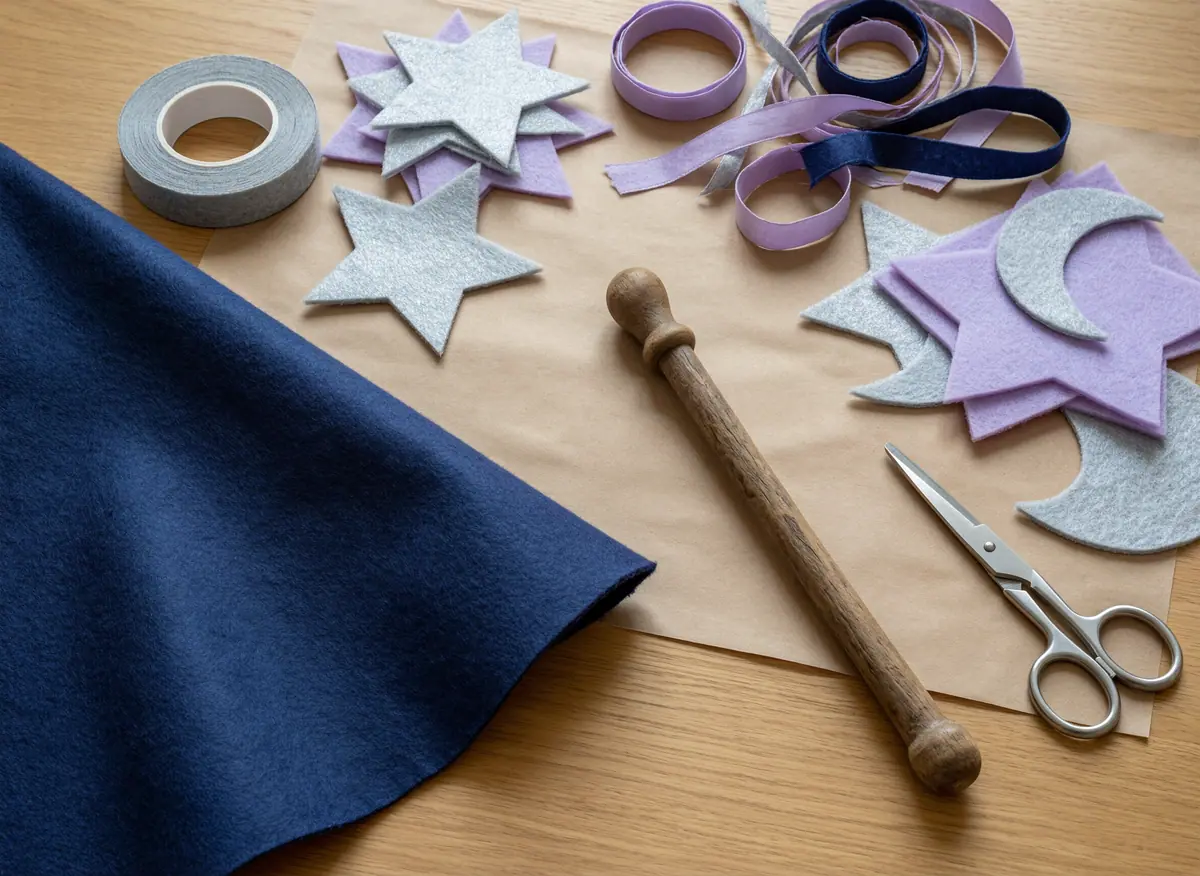
A DIY wizard wand and cloak should be easy to make, easy to wear, and sturdy enough for more than one afternoon. Start with forgiving materials. Fleece, felt, jersey knit, or an old dark curtain can become a cloak without complicated sewing. Felt sheets, foam stars, ribbon scraps, fabric tape, and washable paint can decorate the set. For the wand, use a short rounded dowel, a sturdy cardboard tube, a rolled felt tube, or a foam craft base.
Choose materials by touch before color. A beautiful fabric that scratches the neck will not become a favorite costume. Rub the fabric against the inside of your wrist and check whether it sheds, stretches oddly, or leaves glitter everywhere. A cloak that feels soft and moves well will get more use than one that looks dramatic but is uncomfortable.
Keep the color palette focused. Navy, charcoal, black, deep purple, forest green, or midnight blue all feel wizard-like. Add silver, gold, white, or pale blue stars for contrast. If you are making the set with children, offer two or three color choices instead of every supply at once. Fewer choices make the project calmer and help the finished pieces look intentional.
Measure The Cloak For Movement First
Before cutting, measure from the child's shoulder to the length you want. For toddlers and preschoolers, hip length or upper-thigh length is easiest. For elementary children, mid-calf can work if the child is careful and the event is mostly indoors. Avoid ankle-length cloaks for active play. They look impressive in photos but can catch under shoes, chairs, and stairs.
Lay the fabric flat and cut a simple rectangle or slight trapezoid. A rectangle is easiest and works well for a short cape. A trapezoid, wider at the bottom, gives more movement without needing a full circular pattern. If you want a rounded bottom edge, fold the fabric in half and trim both sides together so the shape stays even. Do not worry about perfection; wizard clothing can look handmade and still feel magical.
Cut the neckline shallow. A deep neck curve can slide off the shoulders, while a very tight curve can press on the throat. A small scoop or straight top edge with shoulder tabs is usually enough. Have the child try it on before adding decorations. If the cloak pulls backward or slips forward, adjust the closure placement before you spend time on stars and trim.
Add A Closure That Releases Easily
The safest cloak closure is one that opens without a struggle. Hook-and-loop tape at the shoulders, snap tabs, or a loose front loop are better than long cords tied at the neck. If you love the look of ribbon, use short decorative ribbon pieces on top of a safer closure rather than tying the whole cloak with a bow.
For a no-sew project, fabric tape can hold hook-and-loop strips, but check the bond after it sits. Some tapes need pressure and time before they are strong. If you are comfortable with a few stitches, hand-stitching the closure corners adds durability. The goal is not couture construction; it is preventing the cloak from falling apart during a treasure hunt.
Try the cloak on again after adding the closure. Ask the child to shrug, sit, and reach forward. If the closure pulls at the throat, move it closer to the shoulders. If the cloak slides sideways, add a second tab. A few minutes of adjustment here saves frustration later.
Decorate With Stars, Moons, And Pockets
Decorating is where the project becomes personal. Felt stars are easier than loose glitter, and they survive more play. Cut stars in different sizes, then attach them with fabric tape, tacky glue, or a few stitches. Place the largest decorations away from the neck and underarms so they do not scratch or peel. Smaller stars can scatter toward the hem.
Moons, comets, lightning bolts, potion drops, and book shapes can give the cloak a specific wizard role. A moon wizard might get silver moons and pale blue stars. A garden wizard might get leaf shapes and green trim. A library wizard might get a small felt pocket for paper spell cards. Pockets are especially useful because children love carrying tiny props, but keep them shallow so they do not collect heavy objects.
Let decorations dry fully before play. This sounds obvious, but excited children often want to wear the cloak immediately. Put the cloak on a hanger or chair back while it dries, and use that waiting time to make the wand. If the cloak is still tacky, stars will shift, glue will transfer, and the project will become messier than needed.
Make A Wand That Can Handle Being Waved
For a classic wand, cut a rounded dowel to a child-friendly length, often 8 to 12 inches. Sand the ends until smooth. Wrap the handle with washi tape, fabric tape, or yarn, then add painted stripes, dots, or stars. If using paint, seal it only with child-safe materials and allow enough drying time. A wand that leaves color on hands is not ready for play.
For a softer wand, roll felt around a thin cardboard tube or use a foam base. This option is excellent for younger children or indoor parties where wands may bump furniture. Attach a small felt star or moon near the top if it is lightweight and secure. Avoid heavy toppers that make the wand swing unpredictably.
Keep ribbons short. A few ribbon knots near the handle are easier to manage than long streamers at the tip. If you want movement, use fabric strips shorter than the child's forearm. The wand should help tell the story, not become a tangle.
Create A Simple Spell Kit
A cloak and wand feel more complete when they come with a tiny play kit. Make paper spell cards with picture prompts: star, cloud, flower, bridge, door, treasure. Children can draw a card and invent what the spell does. Add felt gems, small fabric squares, or colored beanbags for pretend ingredients. Store these in a cloth pouch or small box.
Keep the language open-ended. Instead of writing complicated instructions, use symbols and colors. A blue card can mean water, sky, or calm. A green card can mean garden, forest, or growth. This leaves room for children to invent. It also makes the kit usable by children who are not reading yet.
If the wizard set is for a party, make one shared kit rather than a separate pile for every child. A central basket of spell cards and soft props encourages turn-taking. Children can borrow the pieces, act out a scene, and return them before the next activity.
Store And Repair The Set So It Lasts
When the project is finished, store the cloak folded with decorations facing outward or hung on a small hook. If the stars are heavily layered, avoid crushing the cloak under heavier costumes. Put the wand in a sleeve, cardboard tube, or side pocket so it does not bend. A labeled bin with the cloak, wand, spell cards, and pouch keeps the whole set ready.
After each use, check the closure, hem, and wand tip. Reattach loose stars before they fall off in the playroom. If the fabric stretches or the closure weakens, add a second tab or a few stitches. Homemade dress-up pieces are allowed to evolve. A patched cloak can feel even more like a beloved wizard garment.
The strongest DIY sets are not perfect; they are inviting. When children can put the cloak on without a complicated process, wave the wand safely, and invent a new role each time, the project has done its job.