Start with real clothes
The easiest no-sew costumes begin in the closet, not the craft aisle. Look for clothes your child already tolerates: leggings, sweatpants, pajamas, a hoodie, a plain shirt, a dress, or a comfortable base layer. If the base outfit feels good, the costume has a much better chance of surviving the event.
Choose a base color that supports the theme. Brown leggings and a tan shirt can become a woodland animal, explorer, scarecrow, or little baker. Black clothes can become a cat, bat, spider, stage performer, or night-sky character. Blue can become ocean, rainbow, astronaut, or royal court.
Do not worry if the base is plain. Plain is helpful. It gives your one strong accessory a place to shine.
Add one strong signal
A no-sew costume works when people can read it quickly. That does not require ten pieces. It requires one clear signal. Animal ears say animal. A pointed hat says wizard. A paper crown says royal. A cardboard shield says knight. A striped shirt and scarf can suggest pirate. A silver paper badge can suggest space explorer.
Parents often add too many details because they worry the costume is not enough. Usually the opposite happens. Five small signals compete with each other, fall off, or make the outfit uncomfortable. One bold signal gives the child a character and leaves room to move.
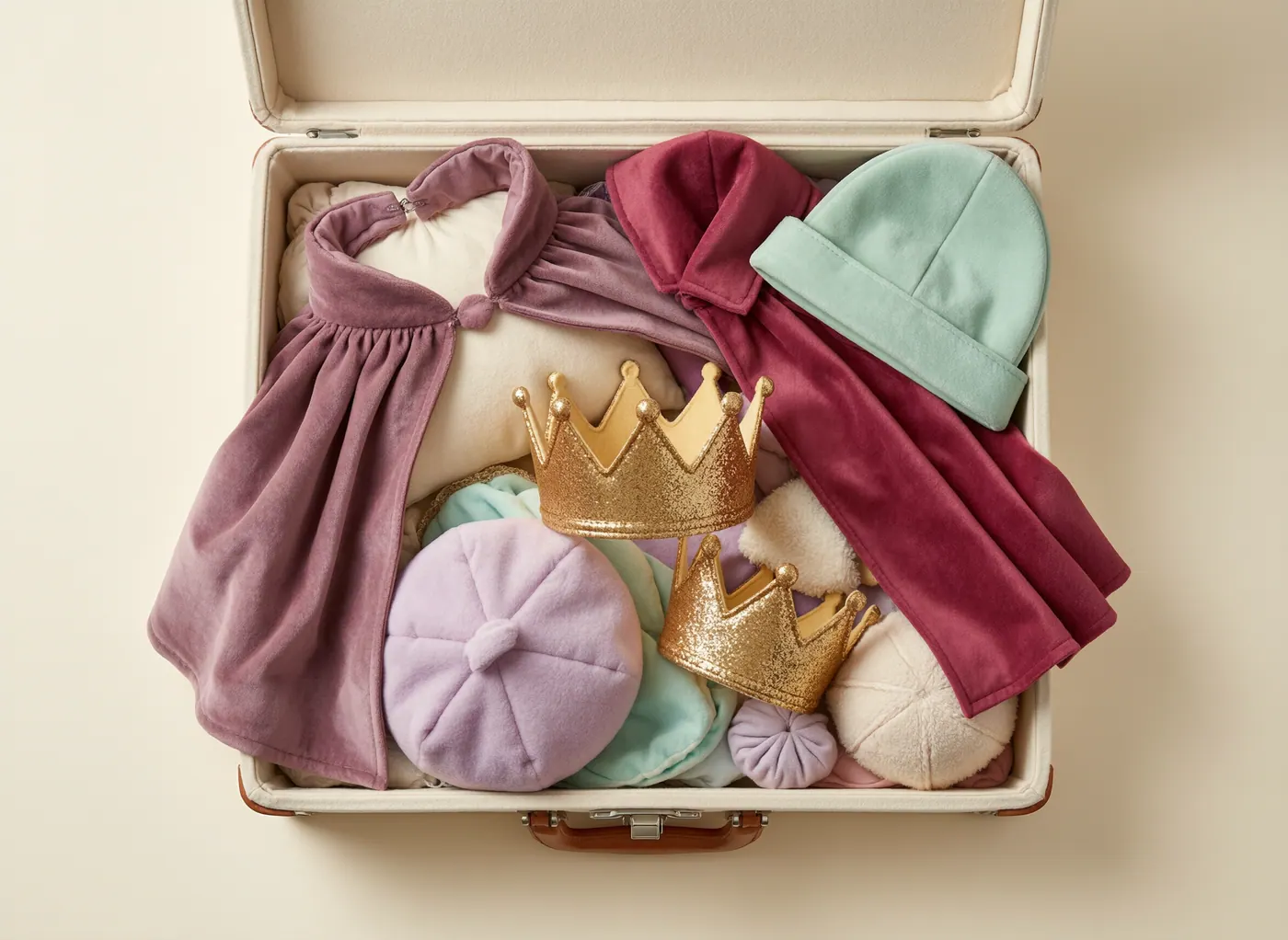
If you have a dress-up trunk, shop there first. Capes, hats, headbands, scarves, belts, and fabric pieces can transform normal clothes faster than a new costume set.
Use color repetition
Color repetition makes a simple costume feel designed. A green shirt, green paper crown, and green ribbon wand read as one idea even if none of the pieces are fancy. A black base outfit with silver stars becomes night sky. A red scarf, red belt, and cardboard apple badge can become a storybook character.
Pick one main color and one accent. More than that can get noisy. If the costume needs sparkle, use it in one place: a metallic ribbon, shiny badge, foil star, or glitter paper prop. Avoid loose glitter near eyes, food, or school floors.
Color also helps groups coordinate without matching. For a party or spirit day, ask children to wear any blue, rainbow, animal color, or royal color. Then provide one shared accessory at the event.
Choose safe no-sew fasteners
No-sew does not mean anything goes. Sharp pins, staples, hot glue edges, and tight neck ties can create problems. Use fasteners that match the child's age and the event.
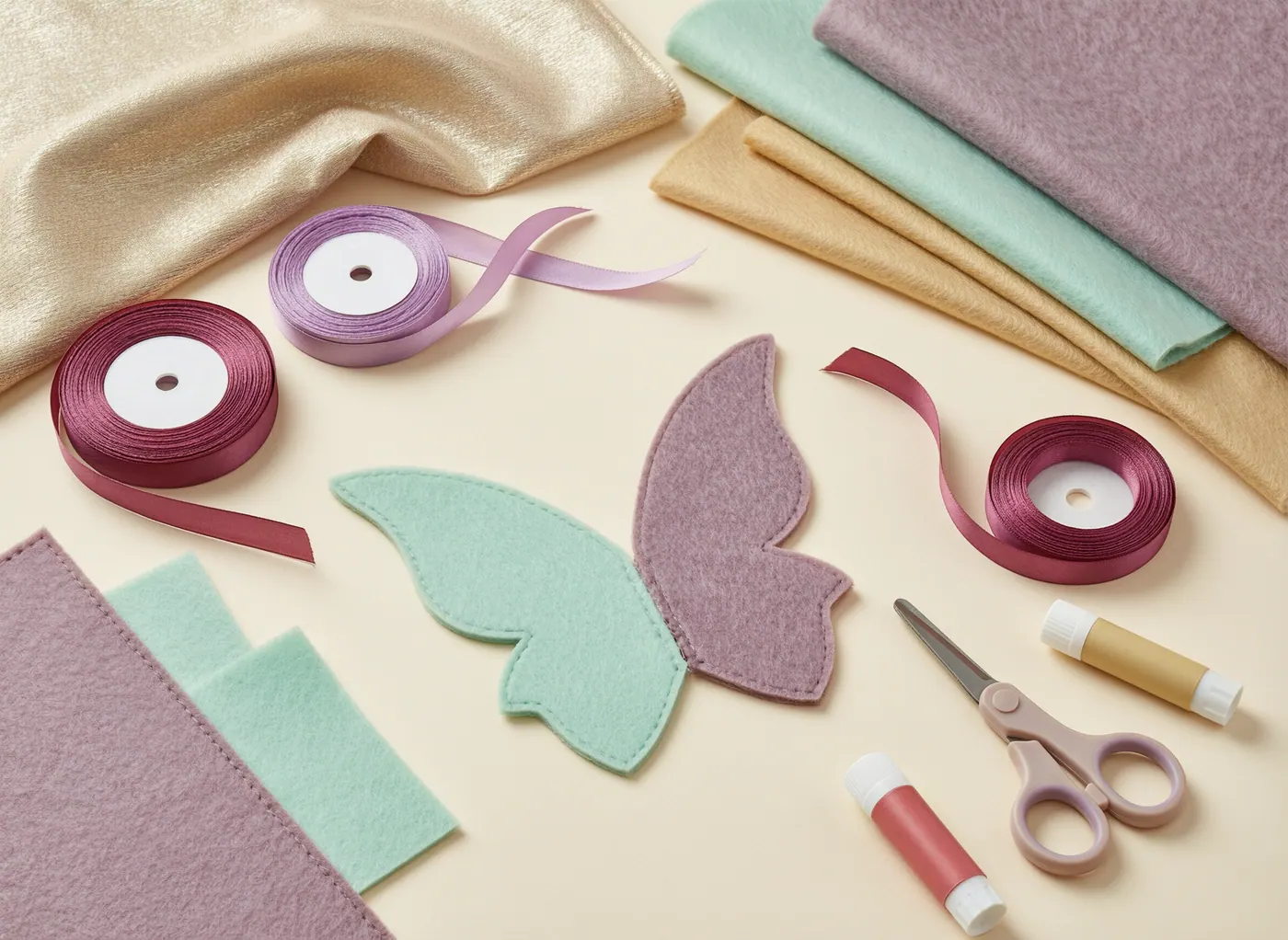
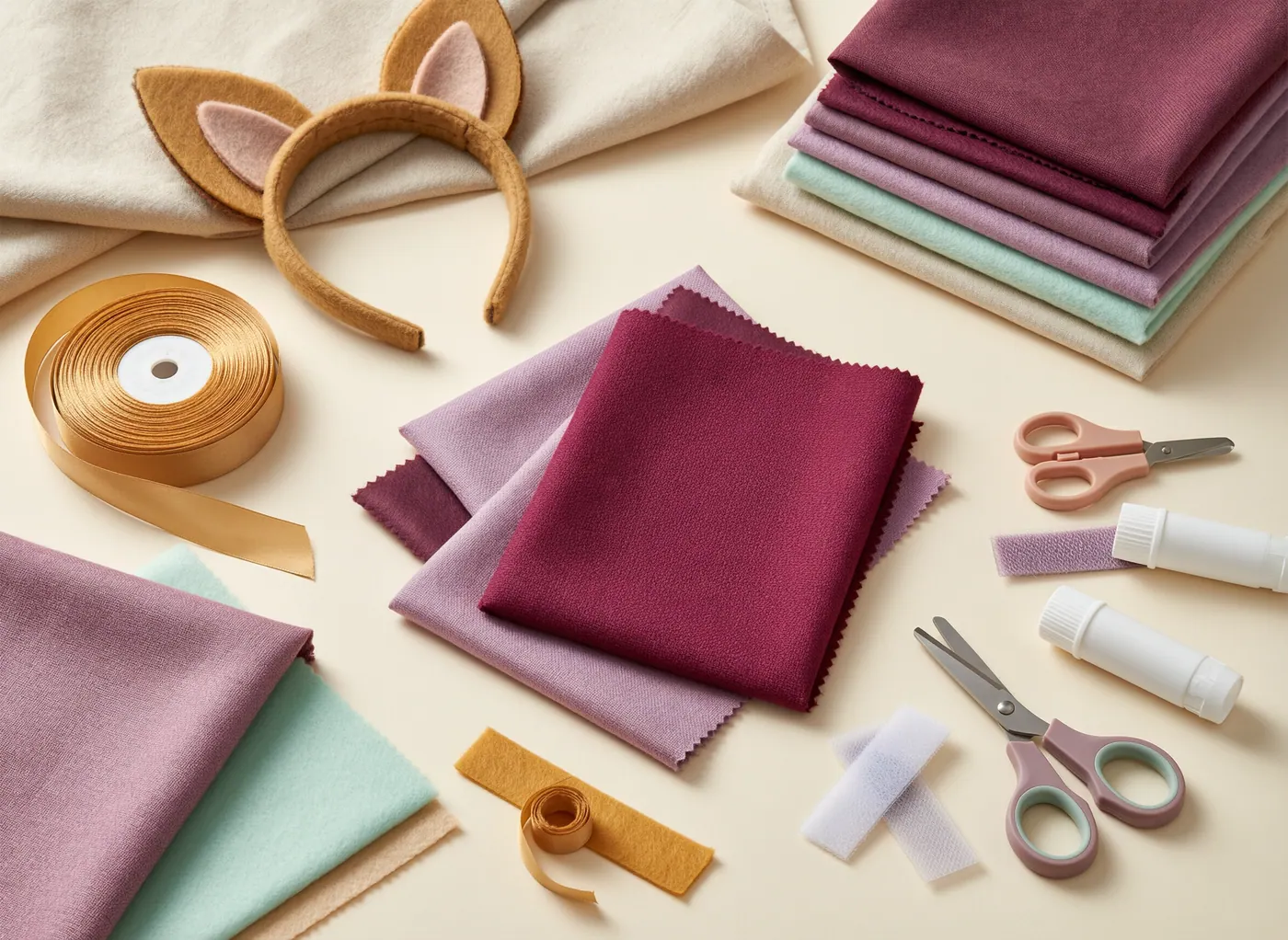
Fabric tape works for temporary hems, stripes, and felt shapes. Adhesive felt can create spots, badges, stars, and simple shapes. Ribbon can tie around a waist or wrist, but avoid long pieces around the neck. Hook-and-loop dots can attach lightweight props. Knots can turn fabric into a sash, skirt, or cape, but cape closures should release easily under pressure.
If you use clips, choose smooth clips that do not pinch and place them where the child cannot poke themselves while sitting. Test every fastener before the event. If a piece falls off during a five-minute trial at home, it will not survive a school day.
Easy no-sew costume formulas
For an animal costume, start with a base outfit in the animal's color. Add felt ears on a headband, a paper nose badge, or a short fabric tail attached at the waistband. Skip long tails that drag or wrap around furniture. For toddlers, keep the tail soft and short.
For a wizard costume, use dark clothes, a simple cape, and a paper or felt hat. Add foil stars or moon shapes with fabric tape. A wooden spoon or cardboard wand can finish the idea without a store-bought set.
For a royal costume, use a dress, tunic, sweater, or plain shirt with a sash. Add a paper crown, soft cape, or ribbon belt. The crown does the work, so the outfit underneath can stay comfortable.
For a space explorer, use gray, white, navy, or black clothes. Add a cardboard control badge, foil wrist cuffs, or a backpack "jet pack" made from two lightweight paper tubes. Keep the backpack light and easy to remove.
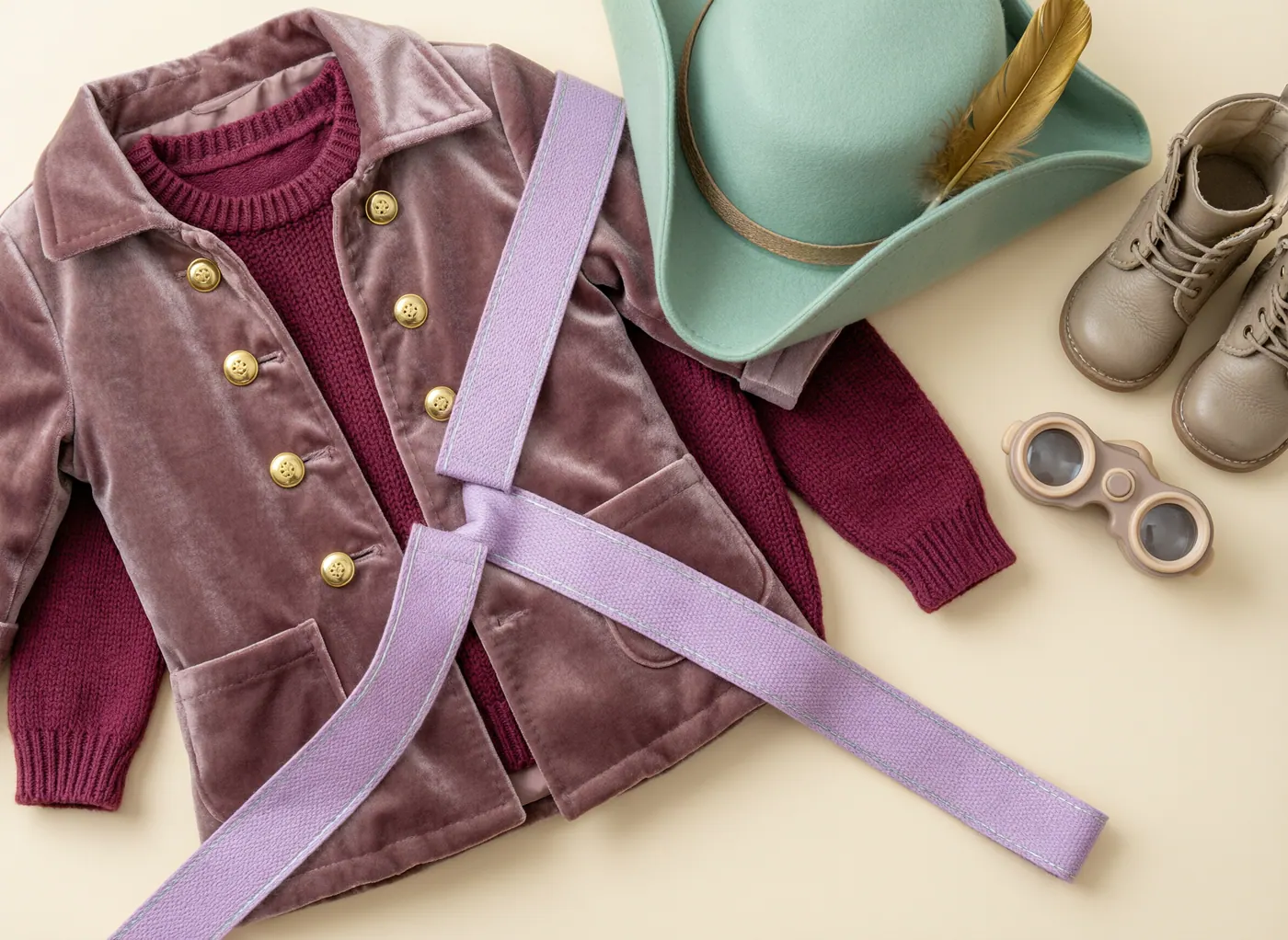
For a storybook adventurer, combine normal clothes with a satchel, map, scarf, and hat. This is one of the easiest costumes for children who dislike full dress-up.
Test movement before the event
No-sew costumes can fail in motion. Before leaving, have the child walk, sit, reach, climb a step, bend down, and use the bathroom if relevant. Check shoes. Check whether the costume blocks vision. Check whether a cape catches under the child's arms or drags on the floor.
For school costumes, assume the child will sit at a desk, eat lunch, wash hands, and play outside. Anything delicate, itchy, or hard to remove may become a problem. For Halloween, test the costume with a jacket or base layer before the weather changes your plan.
The best last-minute costume is the one your child can forget they are wearing.
Save only the reusable pieces
After the event, do not automatically save everything. Keep the pieces that can return to the dress-up trunk: capes, hats, sashes, headbands, sturdy props, and soft accessories. Let go of bent cardboard, shedding decorations, and single-use pieces that will make the trunk messy.
This habit turns no-sew costume making into a useful cycle. Each event adds one or two flexible pieces to the dress-up collection instead of a pile of broken leftovers.
No-sew costumes are not second best. Done thoughtfully, they are often more comfortable, more reusable, and more imaginative than complicated outfits.