Choose by behavior, not furniture style
Dress-up storage should solve the problem you actually have. If children dump every costume to find one cape, they need visibility. If costumes are spread across the house, they need one home. If cleanup takes twenty minutes, they need fewer pieces and simpler categories. If hanging clothes frustrates everyone, a rack may look lovely and still fail.
The three most common choices are a dress-up rack, a trunk, and low bins. None is automatically best. Each one supports a different kind of playroom. A rack turns clothing into visible choices. A trunk gathers soft pieces in one compact place. Bins make broad cleanup categories easy for young children.
Before buying anything, count what you own. How many hanging pieces do you have? How many hats? How many shoes? How many small accessories? The right storage follows the collection.
When a dress-up rack works best
A dress-up rack is best when your child owns capes, dresses, robes, vests, jackets, or long layers that get buried in a trunk. Seeing the pieces helps children choose without dumping. A rack can also make dress-up feel special, which can encourage more independent play.
Choose a child-height rack. The rail should be low enough that the child can remove pieces without pulling the rack over. A wide base matters more than a tall silhouette. If the rack feels wobbly in the store or online reviews mention tipping, skip it.
Racks work better with pegs, large hooks, or easy hangers. If a preschooler cannot hang the costume back up, the system becomes adult-only. Keep the rack edited to five to eight favorites. A crowded rail is just a closet with a smaller footprint.
Racks are not ideal for tiny accessories. Crowns, wands, badges, jewelry, masks, and glasses need a tray or pouch. If everything dangles from the rail, pieces tangle and fall.
When a trunk works best
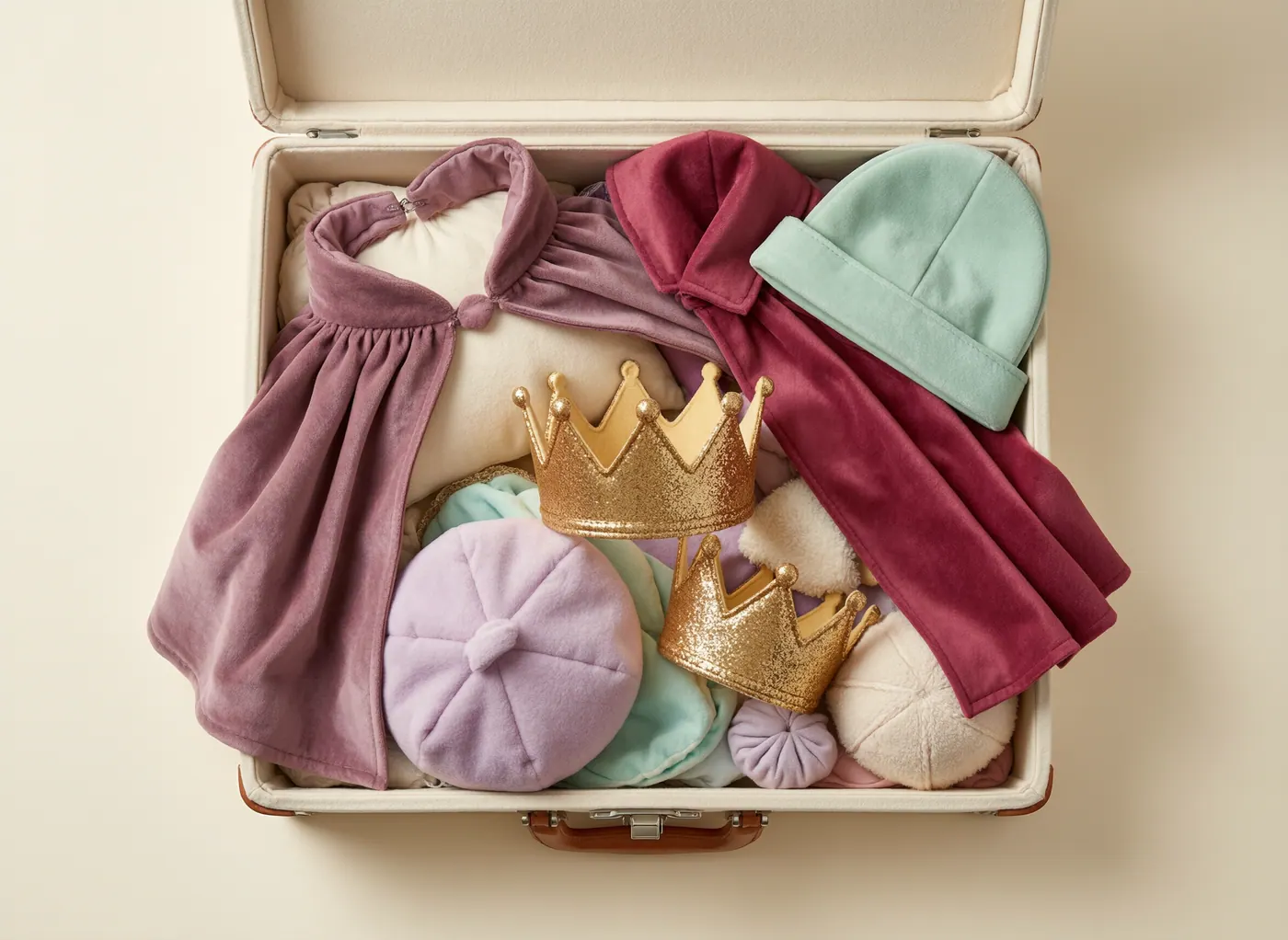
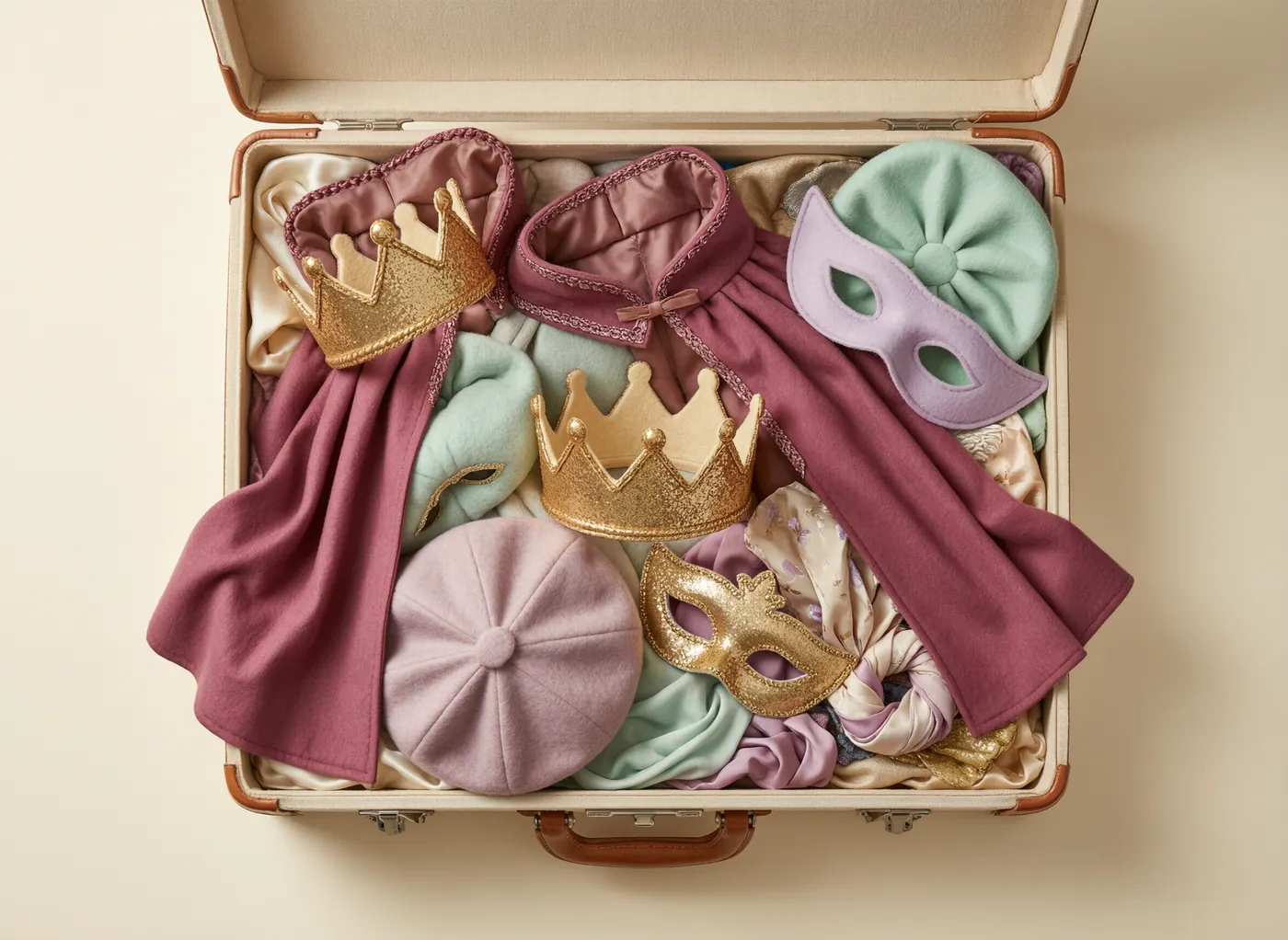
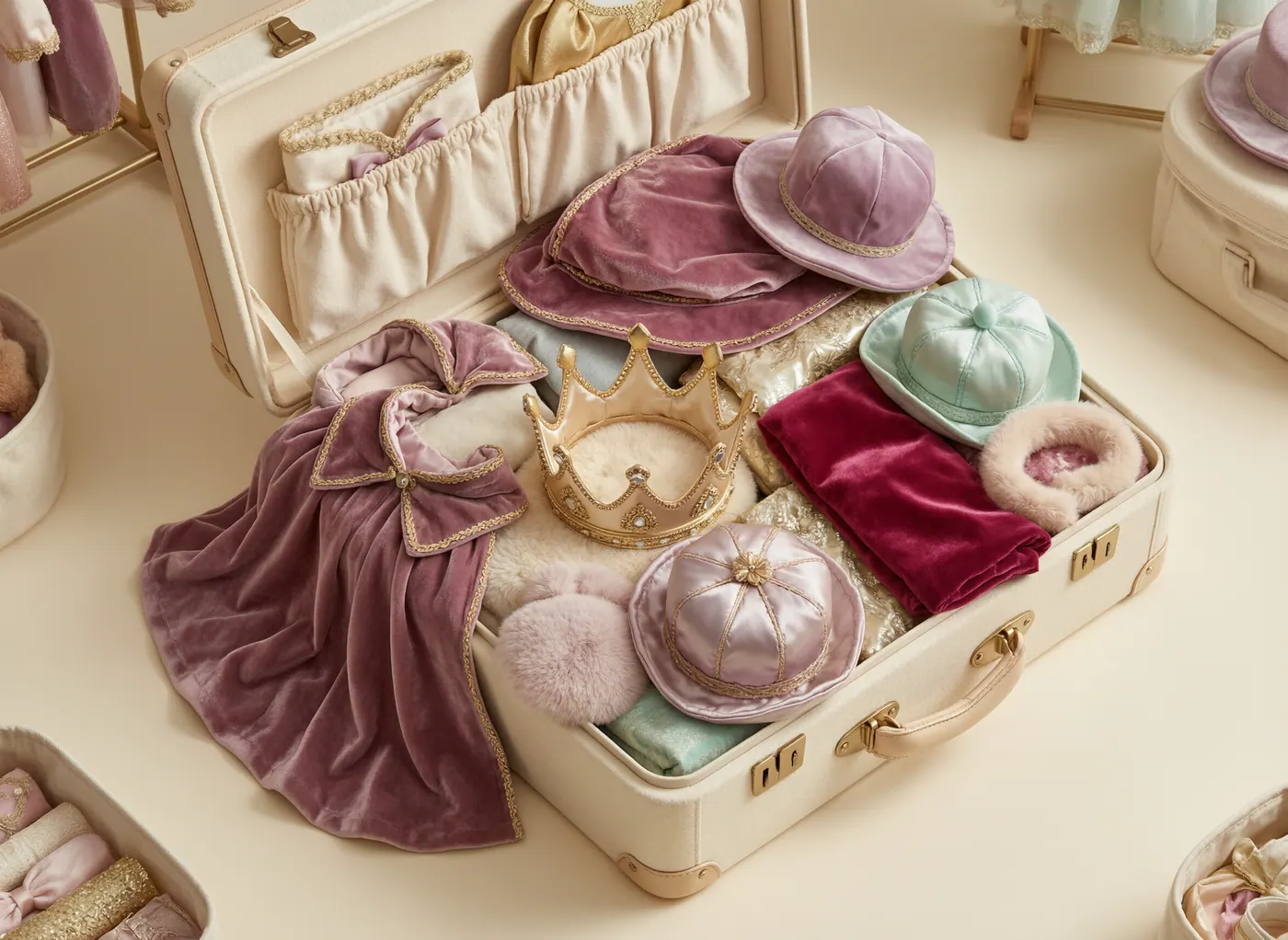
A trunk is best for mixed soft pieces: fabric lengths, capes, hats, aprons, animal ears, simple bags, and flexible role-play clothing. It is compact and easy to close. In a shared living room, a soft trunk can make dress-up feel contained without turning the room into a full playroom.
The best trunk for children is shallow, lightweight, and easy to reach into. A deep chest creates digging. A heavy lid creates pinch risk. A rigid heirloom chest may look charming, but it can be awkward for everyday play.
Use pouches inside the trunk if accessories are part of the collection. One pouch for small pieces prevents crowns and badges from disappearing under fabric. Keep the pouch small so it does not become a second clutter pile.
A trunk needs a piece limit. If it bulges, children will dump it. Keep the working trunk small and store extras elsewhere.
When low bins work best
Low bins work when cleanup is the main pain point. Instead of asking a child to hang every piece, bins let them sort broadly: clothes here, hats here, shoes here, accessories here. Toddlers and preschoolers often manage bins sooner than hangers.
Two or three bins are usually enough. More than that turns cleanup into a filing system. Try clothing, head pieces, and accessories. Shoes can sit under the bins or in their own low basket if you have more than one pair.
Open bins are easiest. Lightweight lids can work in shared spaces, but heavy lids and snapping closures slow children down. If the child has to ask for help every time, the storage is not truly child-friendly.
Bins also work well in closets. A low shelf with labeled bins can keep the bedroom calmer while still letting children choose. Use picture labels if the child is not reading yet.
Best setup for a small room
Small rooms need restraint. Pick one primary storage piece and one accessory home. A short rack plus a tray can work if hanging pieces dominate. A soft trunk plus a small pouch can work if the collection is mostly fabric and hats. Two low bins can work if the child needs easy cleanup.
Avoid stacking bulky dress-up furniture into a small room. A rack, trunk, mirror, shoe shelf, accessory cart, and display hooks may look fun at first, but the child still needs floor space to play. The storage should support the story, not crowd it.
Use wall space carefully. Rounded low hooks can hold capes or bags, but they must be mounted securely and should not invite climbing. Avoid sharp hooks and overloading.
Best setup for siblings
Shared dress-up storage needs clarity. If siblings are different ages, keep toddler-safe pieces in the lowest area and small accessories higher. Older children can request the delicate or tiny pieces when needed.
Give each child one personal hook or pouch only if ownership fights are common. Otherwise, keep the system shared and broad. Too much ownership labeling can make pretend play feel like inventory.
For larger sibling collections, use a rack for common clothing and bins for categories. Keep seasonal and special-event costumes in a separate reserve box. The main storage should hold what gets used weekly.
Safety checks for furniture and storage
Storage furniture should be as safe as the costumes. Check for tipping, sharp corners, splinters, pinching hinges, heavy lids, unstable wheels, and hardware that loosens over time. Children may lean, pull, climb, or hide. Choose storage that tolerates real use.
Racks should have a wide base. If possible, position a rack against a wall, not in the middle of a walkway. Trunks should open easily and should not trap fingers. Bins should be light enough to move and low enough that children do not climb shelves to reach them.
Check the storage monthly. Tighten screws, remove broken hangers, wash dusty fabric bins, and inspect accessories while you reset the system.
A simple decision guide
Choose a rack if your child has several hanging favorites and struggles to find them. Choose a trunk if you need one compact place for flexible soft pieces. Choose bins if cleanup and sorting are the biggest goals. Combine two systems only when each has a clear role.
If you are starting from scratch, begin with a low bin or soft trunk. Add a rack later if the collection grows toward capes, robes, and dresses. Starting small protects the room and teaches you what the child actually uses.
The best dress-up storage is not the fanciest. It is the one a child can choose from, play around, and help reset.