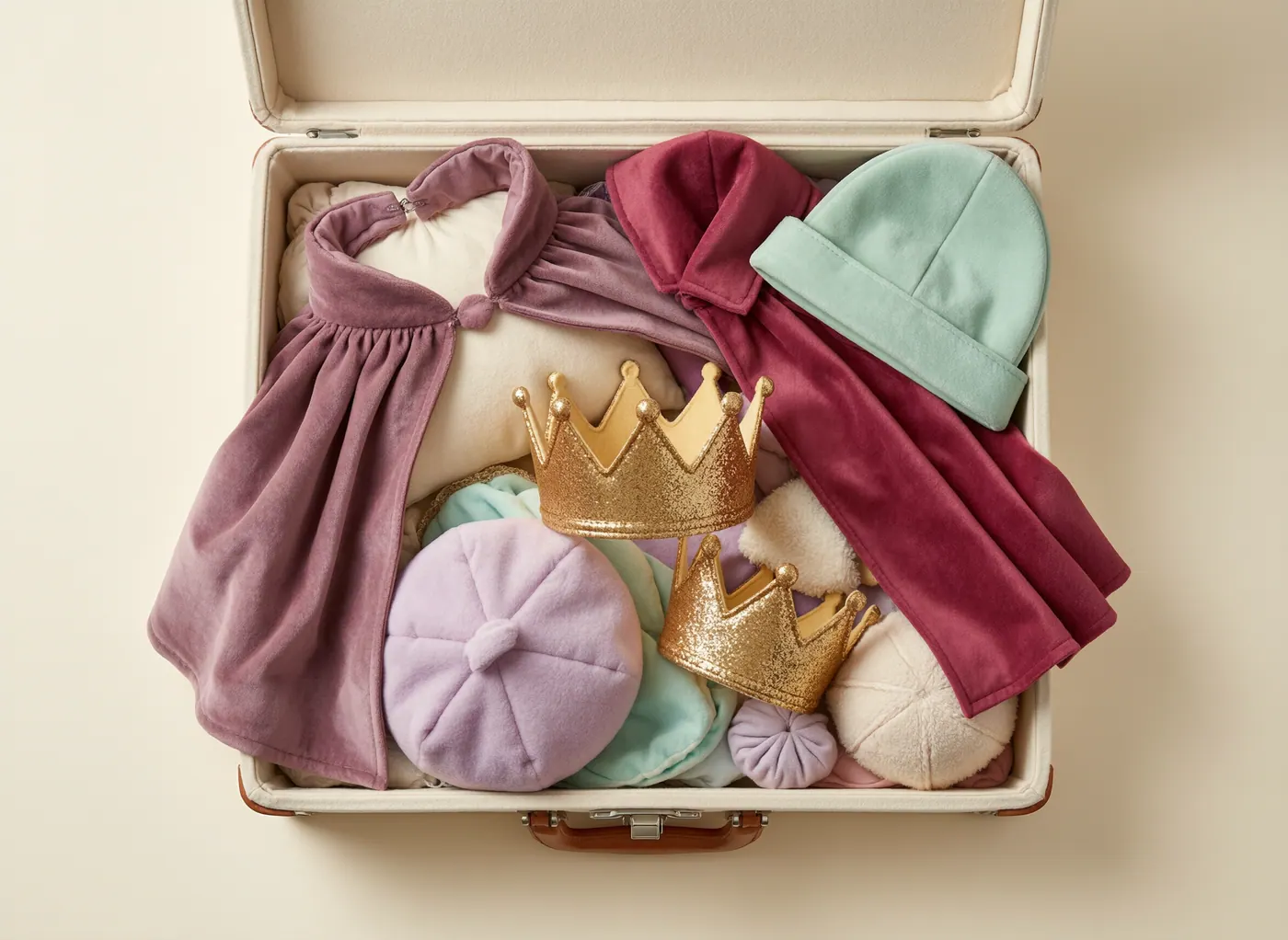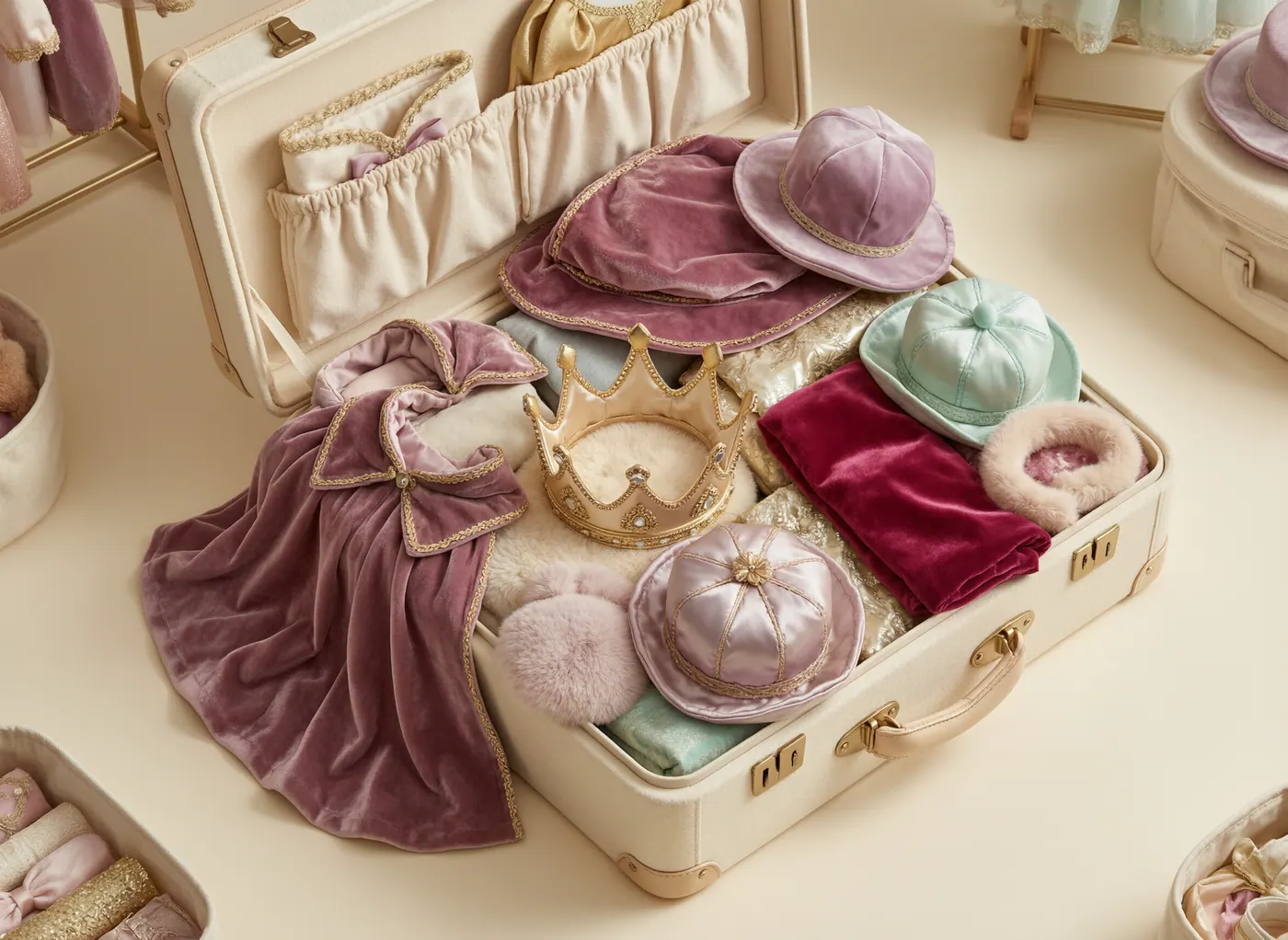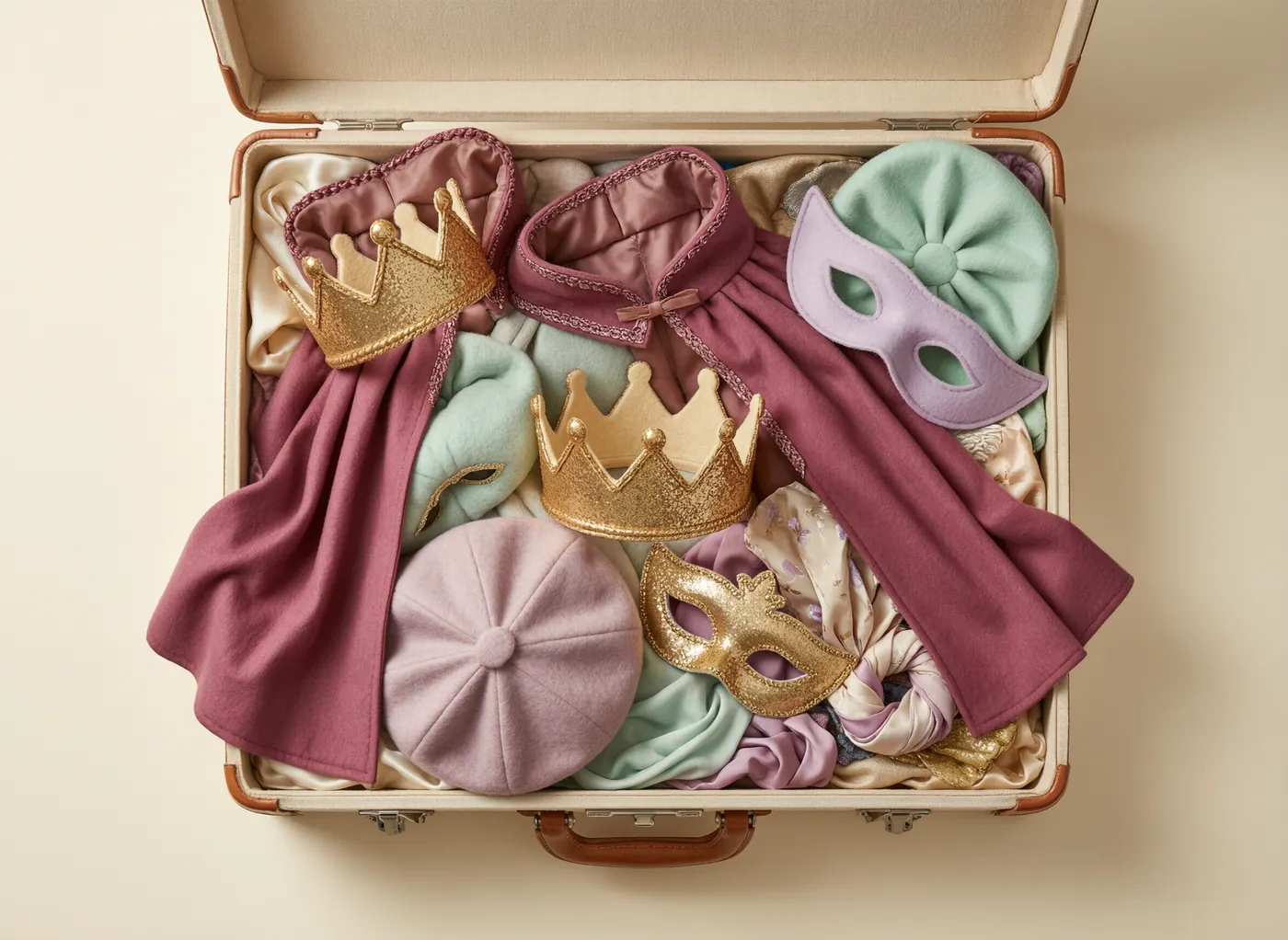
The useful number is smaller than the fun number
It is easy for dress-up clothes to multiply. A Halloween cape stays in the playroom. A birthday crown joins the bin. A hand-me-down princess dress arrives. Someone gifts animal ears. A school spirit item lands on the shelf. Nothing feels excessive on its own, but suddenly the costume area is overflowing and children cannot find what they want.
The question is not how many dress-up clothes would be fun to own. The better question is how many pieces your child can see, choose, use, and help put away. If the answer is "not these," the collection is too large for the current setup.
Most families do better with a capsule dress-up wardrobe: a small set of flexible pieces available every day, plus a reserve box for rotation. This keeps pretend play rich without letting the playroom become storage for every costume ever worn.
Count every piece that creates choice
When deciding how many dress-up clothes kids need, count more than dresses and capes. Hats count. Shoes count. Wands, crowns, bags, badges, belts, scarves, glasses, and pretend tools count. Each item creates a choice and needs a home after play.
A bin with six clothing pieces and twenty accessories is not a small bin. It is a thirty-item cleanup. Children may love accessories, but small pieces are often what make a dress-up area feel chaotic.
Group pieces into broad categories: clothing layers, head pieces, shoes, props, and small accessories. If one category dominates, trim there first. Many homes have too many tiny accessories and not enough flexible clothing layers.
Toddler range: five to eight pieces
Toddlers need the smallest working collection. Five to eight pieces can be plenty because toddlers are still learning how to choose and how clothing changes a pretend role. A good toddler set might include one short cape, one apron, one soft hat, one pair of animal ears, one fabric crown, one roomy vest, and one small bag.
Avoid counting fragile or tiny items in the toddler set. Those can live higher and come down for supervised play if appropriate. The daily bin should contain pieces that are safe to explore, mouth, drag, and wear with limited help.
If the toddler dumps the whole bin every time, reduce the number. If the child uses every piece and cleanup still works, you can add one more. Let behavior decide.
Preschool range: eight to twelve pieces
Preschoolers often enjoy richer stories and can handle more options. Eight to twelve pieces usually gives enough variety without creating a costume mountain. A preschool set might include two capes, one robe or dress, one vest, one apron, two hats, one crown, one soft bag, one simple prop, and one fabric piece.
This is a strong age for open-ended pieces. A cape can become royal, wizard, superhero-inspired, animal, parade, or explorer gear. A fabric square can become a picnic cloth, treasure map, baby blanket, cloak, stage curtain, or magic carpet. The more a piece can become, the fewer pieces you need.
Preschoolers also benefit from visible storage. If they cannot see it, they may forget it exists or dump everything to find it. Keep favorites on low hooks, a short rack, or the top of a shallow bin.
Elementary range: twelve to eighteen pieces
Elementary kids may use dress-up for longer stories, performances, school projects, and group games. Twelve to eighteen pieces can work if storage is clear and the child can help maintain it. This number should include accessories, not just clothing.
Older children may want more specific themes: detective, scientist, royal court, wizard school, space mission, pirate ship, weather reporter, artist studio, or book character. You can support that with a flexible base plus a few theme markers. A satchel, notebook, scarf, vest, badge, and hat can create many roles without needing a full costume for each one.
This is also the age when children can help decide what stays. Ask which pieces they use most, which are uncomfortable, and which ones feel too young. Children are often more honest than adults about what is just taking up space.
Room size changes the number
A large playroom can hold more, but it should not automatically hold more. Floor space matters for pretend play. Children need room to move, build scenes, and involve other toys. A huge costume rack in a small room may reduce the actual play area.
For a small bedroom or shared living space, keep the daily collection near the lower end of the range. Use one bin, trunk, or short rail. Store extras elsewhere. For a dedicated playroom, you can keep a few more pieces out if the child can reset them.
The storage should never be filled to the top. Leave breathing room. A half-full bin is easier to search. A rack with space between hangers is easier to use. Empty space is not wasted; it is what makes the system work.
Build a capsule dress-up wardrobe
A balanced dress-up capsule includes a few movement pieces, a few role markers, and a few head pieces. For example: two capes or fabric layers, one apron, one vest, one robe or dress, two hats, one crown, one bag, one soft prop, and one pair of comfortable play shoes.
Choose colors and textures that combine easily. A gold crown, blue cape, green scarf, striped apron, and soft brown vest can make dozens of stories. Avoid buying many pieces that only work one way unless the child truly uses that theme often.
If you love seasonal costumes, keep them seasonal. Halloween, holiday, school spirit, and party pieces can rotate in when relevant and return to storage afterward.
Rotate instead of buying more
Rotation creates novelty without adding clutter. Keep a reserve box in a closet. Every few weeks, swap two or three pieces. Bring in the space vest and star cape. Move out the pirate sash and garden apron. Children often greet rotated pieces like they are new.
Rotation also gives you a regular safety and comfort check. Look for loose trim, torn seams, cracked plastic, stretched elastic, missing battery doors, and shoes that no longer fit. Remove anything that is broken or unsafe before it returns to play.
Do not rotate too much at once. If the whole collection changes, children may feel disoriented. Keep a few favorites steady and change the supporting pieces.
Signs you have too many
You probably have too many dress-up clothes out if children dump the whole bin to find one item, cleanup always needs an adult, pieces are wrinkled and crushed, accessories disappear daily, or the child uses the same three things while the rest sits untouched.
You may also have too many if storage products keep multiplying. Buying another bin rarely fixes a volume problem. First remove pieces that are broken, uncomfortable, unsafe, too small, too large, too specific, or never chosen. Then see whether the original storage works.
Too few pieces is easier to spot: children ask for the same missing role again and again, siblings cannot play together without conflict, or the collection has no flexible layers. Add slowly and watch what changes.
Let the collection earn its space
Dress-up clothes should earn their space by being used. That does not mean every piece must be worn every day, but it should support real play. A small, active collection is more valuable than a large costume archive children cannot manage.
Start small, count accessories, rotate extras, and trust what children actually choose. The right number is the number that keeps the pretend play alive and the cleanup possible.