Make The Outfit Feel Like A Mission Uniform
Space explorer dress-up works best when the outfit feels ready for action. Start with comfortable clothes in white, gray, navy, black, or silver. Joggers, leggings, sweatshirts, long-sleeve shirts, and zip vests all work because children can sit on the floor, crawl under a table, and move between play stations. The outfit should feel like something a child can wear for an entire mission, not just for one photo.
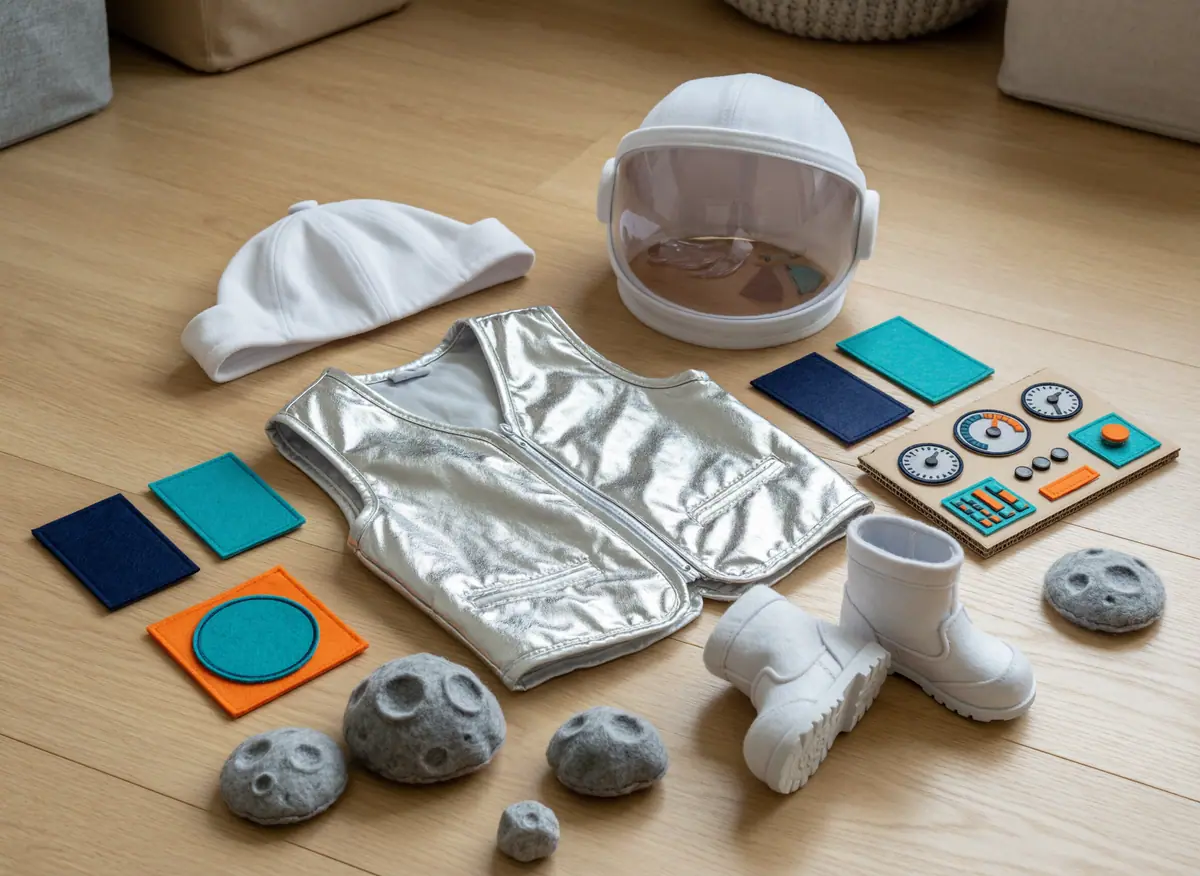
Add a mission layer. This might be a silver vest, a white hoodie with felt patches, a navy utility belt, or a lightweight jacket with star details. The layer is what turns regular clothes into space gear. It also gives you a place to attach removable patches, picture badges, or pretend tools. A vest is especially useful because it fits over many outfits and does not interfere with sleeves.
Avoid bulky full-body suits unless the event is short and the child already loves wearing them. Many astronaut-style costumes look exciting but become warm, stiff, or difficult for bathroom breaks. A modular outfit is easier to adapt. If the child gets hot, the vest comes off. If they dislike a patch, it can be removed. The mission continues because the costume is flexible.
Use Helmet Alternatives That Children Can See And Hear Through
Space helmets are iconic, but rigid helmets can be hard for children to wear. They may block side vision, muffle sound, slide around, or make children too warm. For active pretend play, consider softer alternatives. A white cap with a felt badge, a silver hood, a padded headband, or a fabric collar can create the space look without covering the face.
If you use a helmet, test it carefully. The child should be able to see to both sides, hear instructions, breathe comfortably, and remove it without help. Check the edges for scratching. Make sure the helmet does not fall forward when the child bends down. If it fails any of those checks, save it for a short photo moment and use a softer option for play.
You can also shift the space signal away from the head entirely. A mission badge, control panel wrist cuff, oxygen-tank-style backpack made from soft fabric, or silver boot covers can make the theme clear. Children do not need every astronaut detail at once. One or two strong symbols are enough.
Create A Mission Station With Everyday Materials
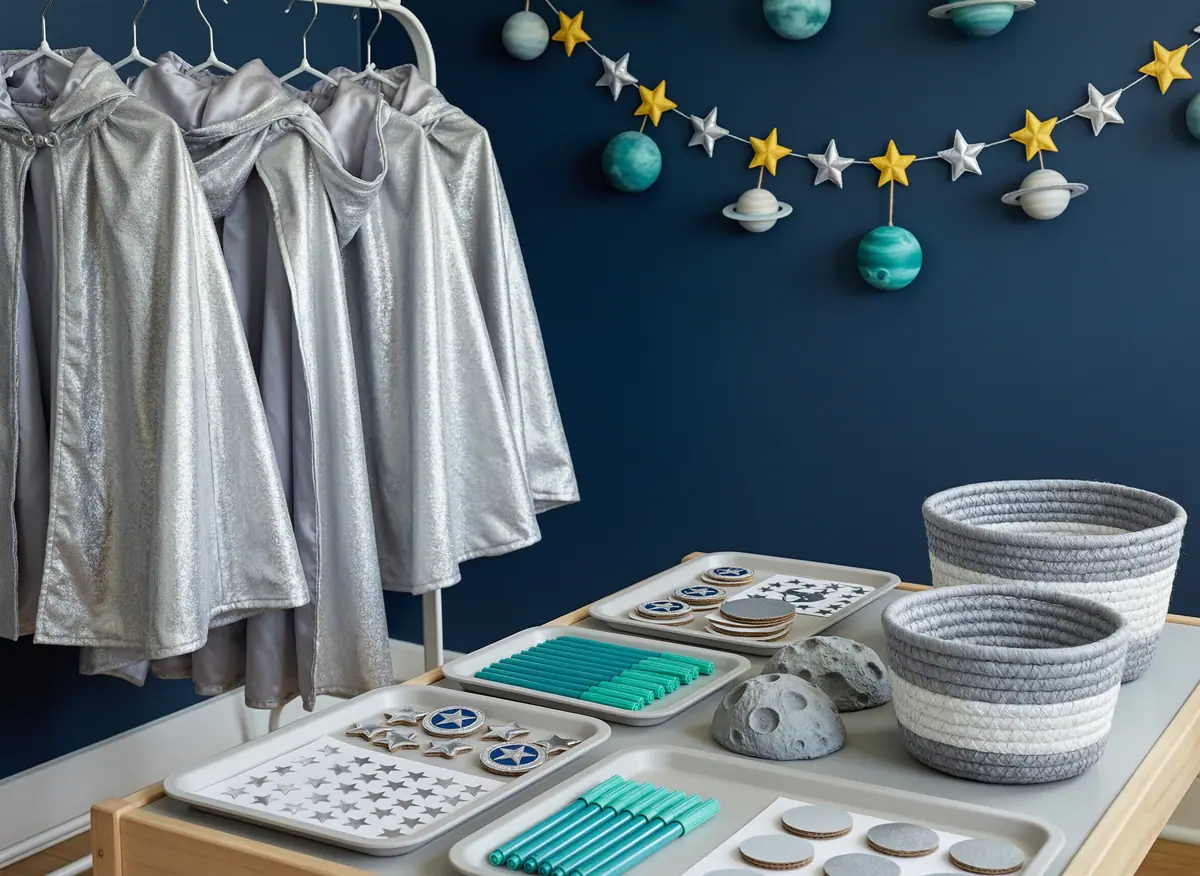
The costume becomes more engaging when children have a job. Build a mission station from a small table, cardboard box, or low shelf. Add a pretend control panel with buttons made from bottle caps, paper circles, or stickers. Use picture labels instead of readable instructions so younger children can participate. A clipboard with planet cards, a basket of felt moon rocks, and a few fabric flags can support many stories.
Keep props sturdy and replaceable. Cardboard panels will get tapped, repaired, carried, and redesigned. That is part of the play. Tape loose edges, avoid sharp corners, and keep small caps or buttons secured if younger siblings are present. If a prop becomes fragile, swap it out instead of trying to preserve it as decor.
Missions can be simple: collect three moon rocks, deliver supplies to the station, match planets by color, repair the solar panel, or rescue a lost rover. Children can take turns as commander, engineer, scientist, pilot, and mapper. These roles make space dress-up cooperative and give quieter children a way to join without being the center of attention.
Build Space Dress-Up From A Small Reusable Kit
A strong space dress-up kit does not need many pieces. Start with one vest or jacket, two soft headwear options, a handful of patches, one utility belt or pouch, and a few mission props. Add silver fabric strips, star scarves, or gloves if children enjoy them. This kit can support astronaut, engineer, planet explorer, space medic, comet scientist, and rover repair stories.
Use removable details whenever possible. Felt patches with hook-and-loop backing can move between a vest, pouch, and banner. A silver scarf can become a comet tail, a signal flag, or a space blanket. A small pouch can hold tools one day and moon samples the next. Open-ended pieces make the theme last longer than a single costume.
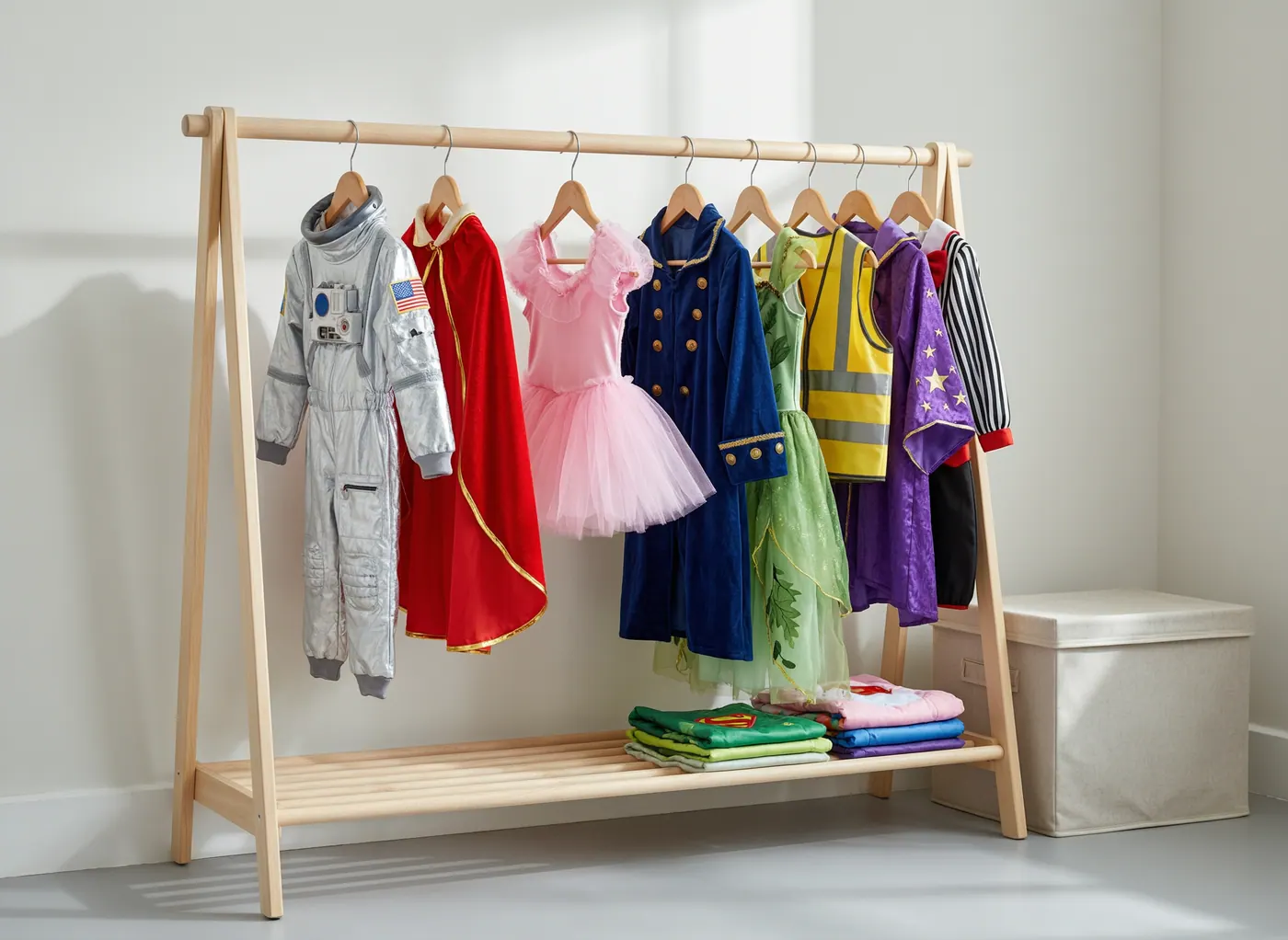
Storage is part of the kit. Keep the pieces together in one labeled bin or trunk section. Put flat patches in a pouch so they do not disappear. Store mission cards in a small envelope. If the vest is shiny or padded, hang it or place it on top so it does not crease under heavier clothes. When children can find the pieces, they are more likely to start the theme on their own.
Add Learning Without Turning Play Into A Lesson
Space dress-up naturally invites science words, but the play should still feel like play. Instead of giving lectures, seed the environment with objects and prompts. A basket labeled by pictures can hold moon rocks, stars, planets, and tools. A simple map can show a path from Earth to the moon to a pretend station. Children can sort, count, carry, repair, and describe what they find.
Use accurate words casually. Say orbit, crater, rover, launch, mission, signal, gravity, telescope, and crew when they fit the story. Children absorb vocabulary when it helps the game. If they invent imaginary planets or silly tools, follow their lead. The goal is curiosity, not correction.
For older children, add challenge cards. Examples include: build a shelter from three cushions, design a rover route, find five silver objects, or deliver supplies without touching the asteroid field. These prompts extend play while keeping the costume active. A child in a space vest with a clipboard suddenly has a reason to move, plan, and collaborate.
Keep Movement And Safety In The Center
Space outfits can accidentally collect awkward parts: backpacks, hoses, helmets, gloves, boot covers, belts, and tools. Before the costume is used for a party or school event, reduce the outfit to the pieces that serve the story. Anything that blocks vision, drags, squeezes, or makes sitting difficult should be changed or removed.
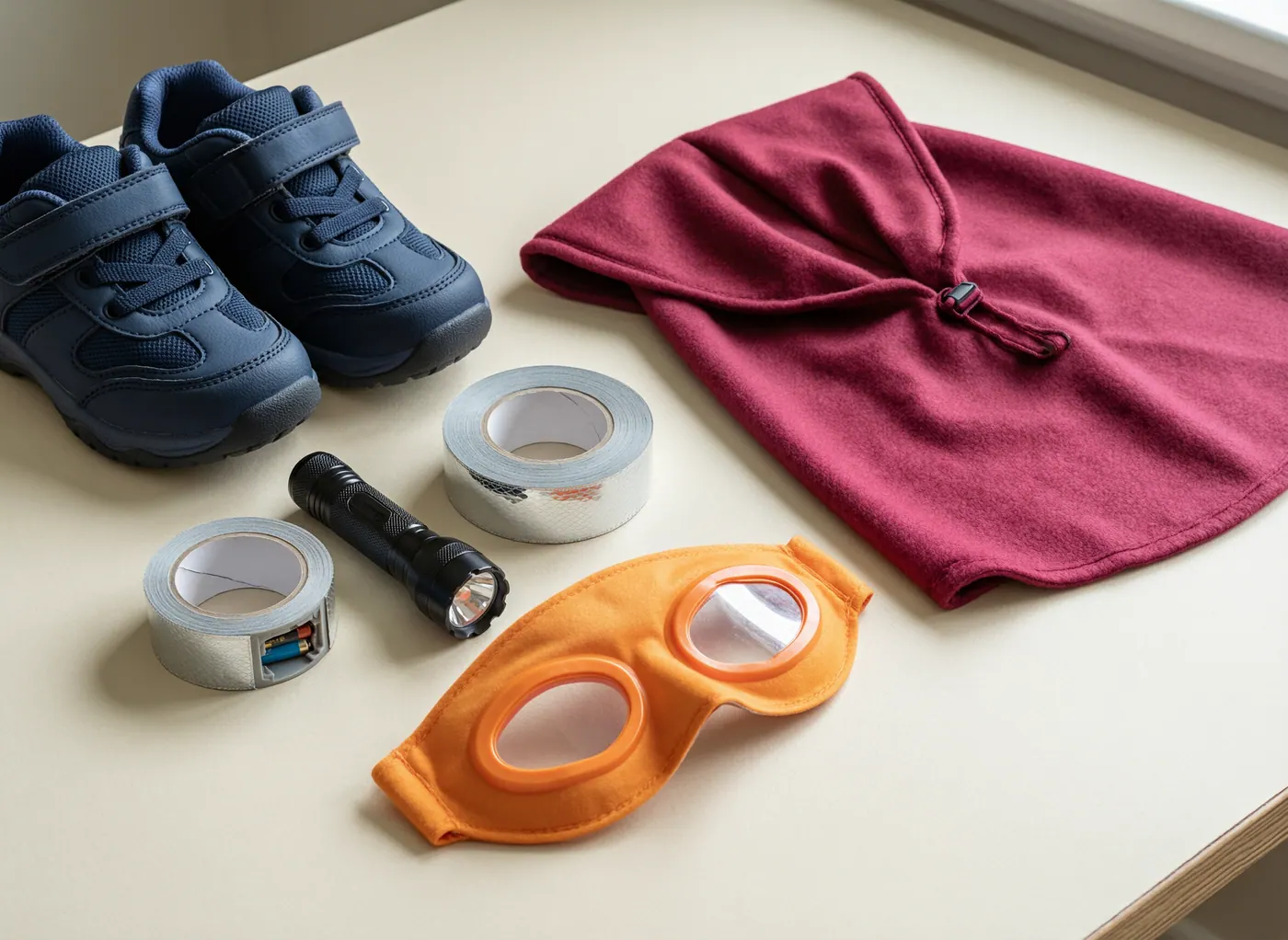
Do a mission test. Have the child walk, sit, crawl, reach, and pick up a prop. Watch the belt, vest, helmet, and shoes. If gloves make it hard to hold objects, use wrist cuffs instead. If boot covers slip, remove them. If a backpack swings, lighten it or make it decorative only.
Space explorer play is often energetic because children are launching, landing, repairing, and rescuing. Keep the play area open, especially if capes or shiny fabric strips are involved. Put fragile decor high or out of the way. A well-planned space setup gives children room to move like explorers while keeping the costume comfortable enough for the whole mission.