Design The Party Around A Shared Mission
A space dress-up party becomes easier to plan when every activity belongs to one shared mission. The guests might be preparing a moon base, fixing a rover, collecting comet samples, or delivering birthday supplies to a pretend space station. A mission gives children a reason to put on badges and vests, and it helps grown-ups explain the party without juggling unrelated games.
Keep the mission simple enough to repeat. "Collect moon rocks and repair the station" is better than a complicated story with many rules. Children can enter the play at different moments and still understand what is happening. If a guest arrives late, hand them a badge and say, "The crew needs another explorer." That is enough.
Use roles to include different personalities. One child can be the pilot, another the scientist, another the engineer, another the mapper, and another the supply helper. These roles prevent every child from racing toward the same prop. They also give quieter children a way to participate through sorting, drawing, carrying, or observing before joining the active game.
Set Up A Lightweight Costume Station
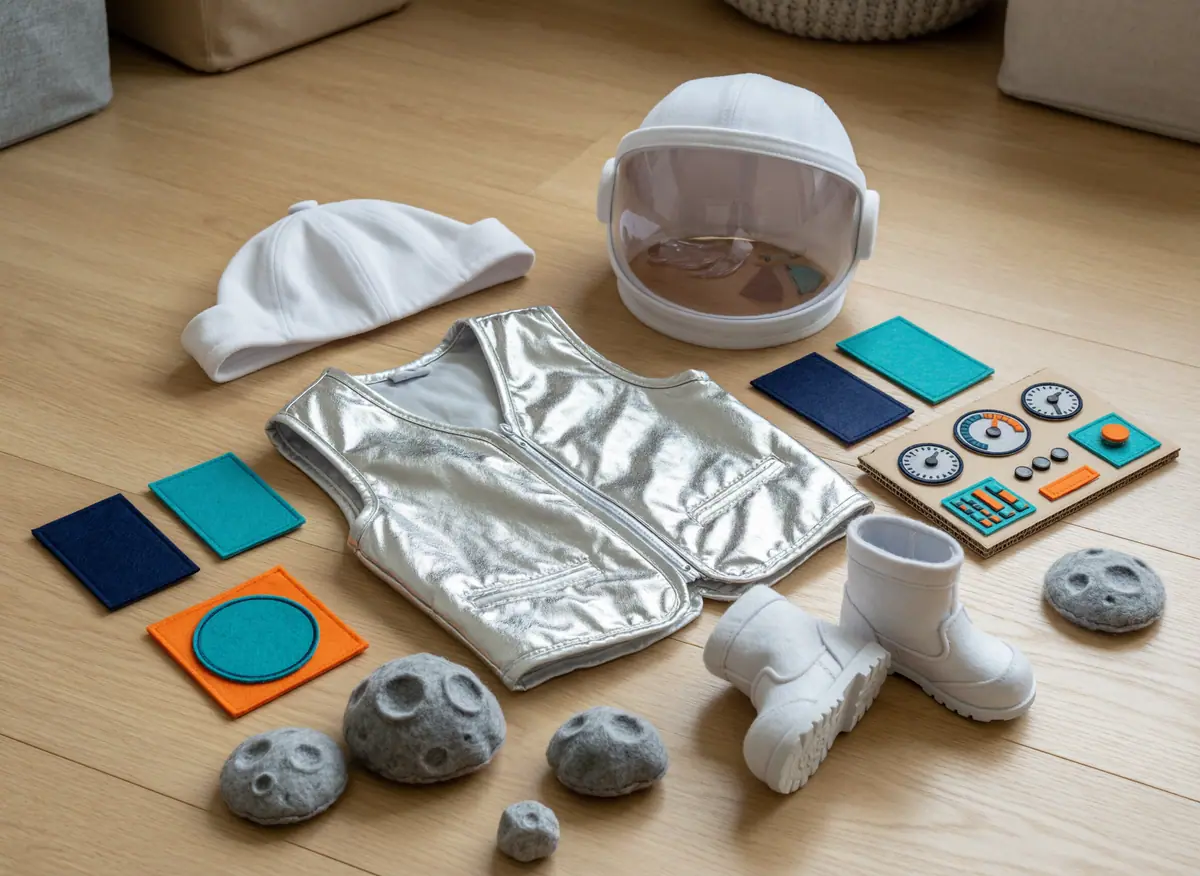
The costume station should feel like a mission prep area. Use shallow bins or hooks for vests, caps, badges, wrist cuffs, utility belts, and small pouches. Place rigid helmets, if you have them, on a higher shelf for short supervised use rather than constant wear. Many children enjoy the idea of helmets but find them uncomfortable once the party gets busy.
Plan two or three pieces per child. A badge, vest, and cap are plenty. Too many items slow the beginning of the party and create more cleanup. Use white, gray, navy, silver, and small accents of orange, teal, or red. If pieces are not identical, that is a strength. The crew can look like a group of different specialists instead of a row of matching costumes.
Add a mirror only if it does not block movement. Children wearing vests and belts need space to turn. If the party is in a small room, skip the mirror and use a simple check-in table where an adult helps attach badges. Keep a basket nearby for pieces children remove during games or snack. The station should support dress-up, not trap guests in a line.
Make Mission Badges And Gear
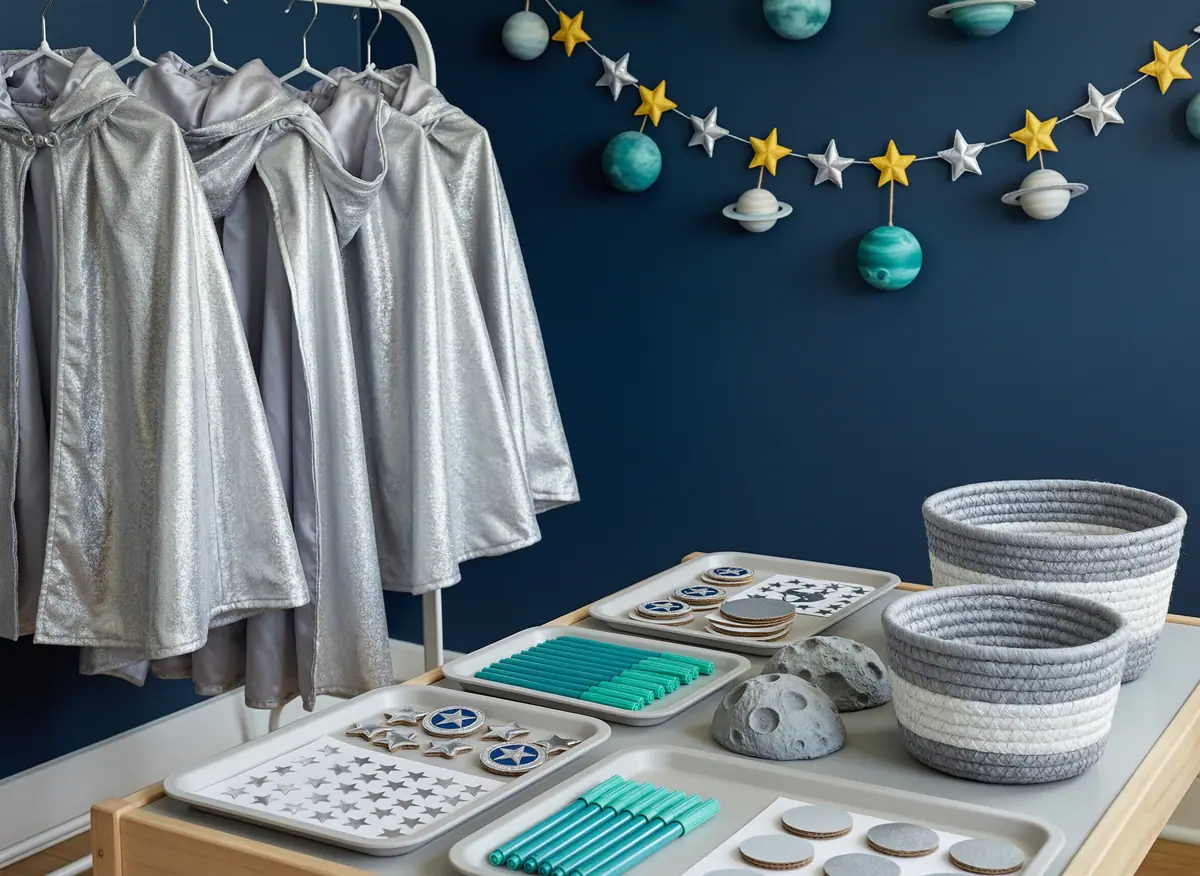
A mission badge craft is one of the most reliable space party activities because it is quick, personal, and useful for the rest of the party. Pre-cut circles, shields, stars, or rocket shapes from cardstock or felt. Children can decorate them with stickers, markers, foil shapes, or stamps. Use picture symbols for roles: star for pilot, gear for engineer, leaf or rock for scientist, map for navigator, heart for medic.
If badges will be worn, use tape loops, clips, or lanyards that are appropriate for the age group. For younger children, badges can attach to a vest or go into a pouch instead of hanging around the neck. Let children decorate more than one if time allows. A child may start as a mapper and later become the rover mechanic.
For a second craft, make paper control panels or wrist cuffs. Cardboard strips with drawn buttons become mission tools. Keep the materials flat and dry; wet glue can make cuffs difficult to wear right away. Stickers, washi tape, and washable markers are faster. Put finished gear in a named or picture-marked spot while children move to the next activity.
Choose Games That Work With Costumes
Space games should use soft props and clear paths. Moon rock rescue is simple: scatter crumpled foil balls, felt rocks, or soft gray balls around the room and ask the crew to collect them in baskets. For toddlers, keep everything visible. For older children, add color sorting, counting, or delivery routes.
Rover repair works well at a table or on the floor. Place a cardboard box rover with detachable paper wheels, button stickers, and tool cards. Children can match parts, tape panels, or deliver pretend batteries. This game is calmer than a running activity and gives children who need a break something purposeful to do.
Asteroid path is more active. Put cushions, paper circles, or floor dots in a path and ask children to cross the asteroid field while carrying a soft supply. Make the path wide enough for vests and pouches. Avoid blindfolds, spinning challenges, or games that encourage pushing. The excitement should come from the story, not from risky movement.
Decorate With Space Signals, Not Clutter
Space decor can be dramatic without filling every surface. Hang paper stars, a planet garland, or a dark cloth behind the snack table. Use silver cups, navy napkins, and a few foil accents to create the theme. Keep the floor clear for missions. Children in costume need more space than a normal birthday party, especially if they are carrying baskets or wearing belts.
Create one focal area for photos or cake. A simple backdrop with stars, a moon shape, or a cardboard rocket is enough. Avoid placing decor where children will run through it. If you make a cardboard control panel, decide whether it is for play or display. Play props should be sturdy and reachable. Display pieces should stay out of the traffic path.
Lighting can help if the party is indoors, but keep it practical. Battery tea lights in jars, glow sticks used with supervision, or star projectors can create atmosphere for a short calm moment. Do not make the whole party too dark. Children need to see costume pieces, steps, and props clearly.
Plan Snack Time Like A Costume Break
Snack and cake are easier when costume accessories have a parking spot. Before food, ask the crew to dock their tools. Put wands, repair tools, gloves, and helmets in labeled baskets. Vests and badges can usually stay on, but remove anything that dangles into food. This keeps frosting, juice, and crumbs away from the costume bin.
Space snacks do not need complicated shapes. Planet fruit, star crackers, moon cheese, sandwiches cut into simple circles, popcorn, and cupcakes with paper toppers all work. If using dark icing or bright colors, offer wipes and keep costume pieces away from the table. A birthday party should not end with every vest needing emergency cleaning.
Use snack time as a story pause. The crew can refuel, read a short space book, or receive the next mission card. This helps children transition from active movement to sitting. After snack, reopen the costume station so children can change roles if they want.
Make Cleanup Part Of The Final Mission
Before the party starts, label bins for badges, vests, caps, tools, moon rocks, and craft pieces. Picture labels are helpful even when children can read because they make sorting quick. Put a laundry basket nearby for anything that needs washing. Keep damaged cardboard props separate so they do not shed tape and paper into the costume bin.
At the end, announce the final mission: return gear to the station. Children can collect moon rocks, dock tools, fold maps, and place badges in a tray. This turns cleanup into one last cooperative activity instead of a sudden stop. It also helps you see what is missing before guests leave.
Afterward, decide what becomes everyday dress-up. Vests, badges, cuffs, moon rocks, and mission cards can go into a space bin for future play. Flatten cardboard panels if they survived, or take a quick photo before recycling them. A well-planned space party leaves behind a reusable play kit, not just decorations to throw away.